
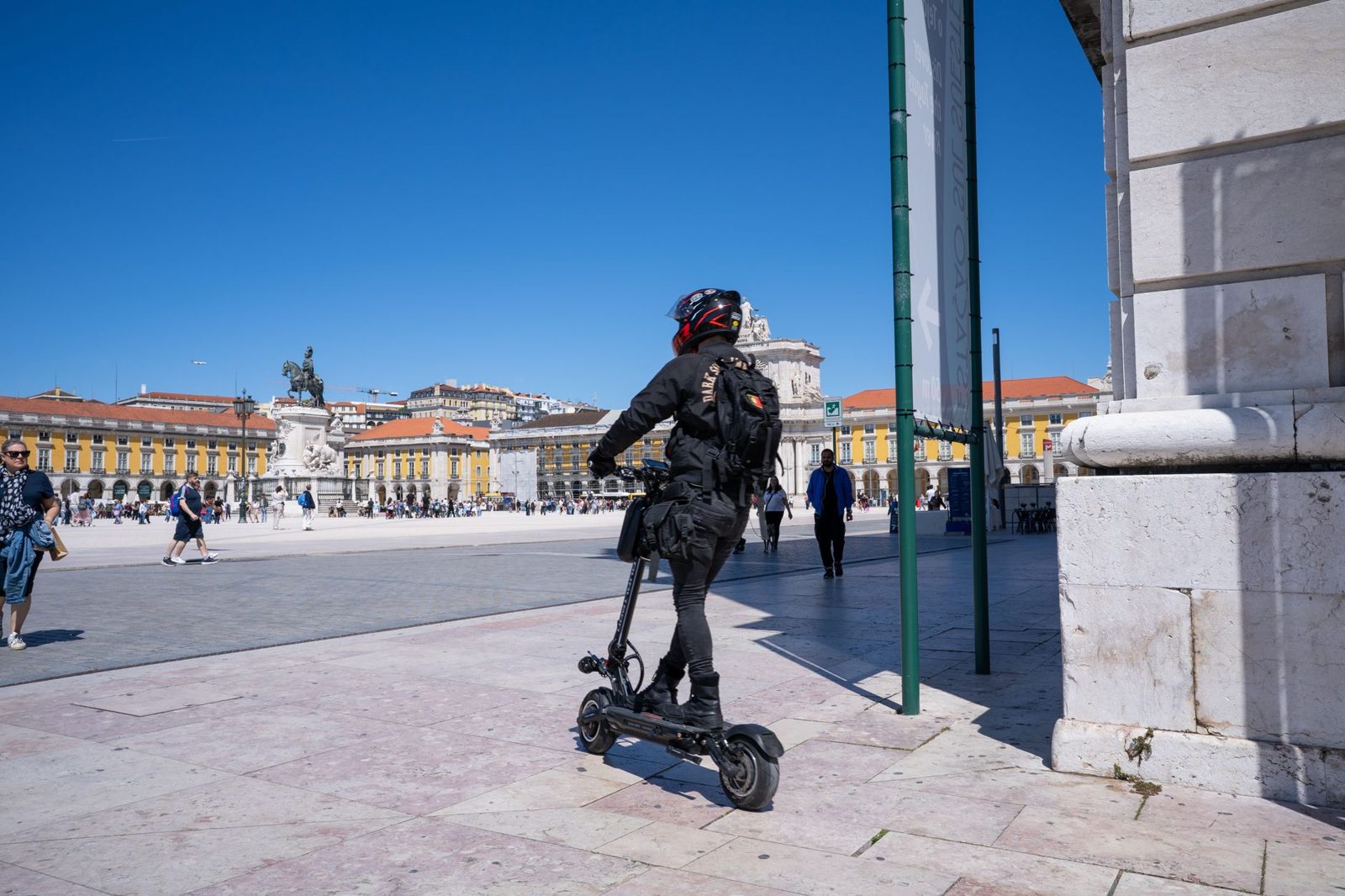
Quick answer: In all four UK nations it is illegal to ride a privately owned e-scooter on public roads, pavements, cycle lanes or in parks. You can only ride one on private land with the landowner’s permission. The one legal exception is the government-backed rental e-scooter trials, which run only in certain areas of England and are currently due to end in May 2028. Riders on the trials need a full or provisional driving licence with category Q entitlement. Checked September 2026.
E-scooters are everywhere in British towns, so it surprises many people to learn that almost all of that riding is illegal. This guide explains the law in plain English for England, Wales, Scotland and Northern Ireland, what the rental trials allow, and what can happen if you are stopped by police. Laws in this area are under review, so always check the official sources listed at the end before you buy or ride.
Why private e-scooters are illegal on UK roads
Across the UK, an e-scooter counts as a motor vehicle. That means a rider would need the same things a moped rider needs: a licence, insurance, and a vehicle that meets road-legal standards. Private e-scooters do not meet those standards and cannot be insured for road use, so there is no legal way to ride one in public.
The Department for Transport’s guidance for users states plainly: “It is against the law to use a privately owned electric scooter on public land.” Its page on the rental trials adds that “private e-scooters remain illegal to use on public roads.”
Buying and owning an e-scooter is legal. Riding it on your own driveway, garden or other private land with the owner’s permission is legal. The problem starts the moment you ride it on a road, pavement, cycle lane, park path or other public place.
The law nation by nation
England
- Private e-scooters: illegal on public roads, pavements, cycle lanes and other public land.
- Rental e-scooters: legal only inside an approved trial area, on an operator’s scooter. England is the only nation with live trials.
- Penalties: Transport for London says riding a private e-scooter can bring a £300 fixed penalty and six points on your driving licence for riding an uninsured motor vehicle. The DfT also warns that the scooter “could be impounded”.
Wales
- Private e-scooters: illegal in public. Wrexham County Borough Council, quoting North Wales Police, states that “riding an e-scooter on the highway, pavement, or on cycle lanes in Wales is illegal” and that riding is only possible on private land with the landowner’s permission.
- Rental e-scooters: there are no trials in Wales. Senedd Research notes that it is “illegal to ride any e-scooter, private or rental, in Wales”.
- Penalties: police may seize a scooter used in a public place. For fine amounts, check with your local police force (Dyfed-Powys, Gwent, North Wales or South Wales Police).
Scotland
- Private e-scooters: Police Scotland says e-scooters “are not permitted on public roads, pavements or other public spaces, as they do not meet the necessary legal standards”, and that “their use is only legal on private land with the landowner’s consent.”
- Rental e-scooters: no trial schemes are running in Scotland. The UK government’s list of live trial areas covers England only.
- Penalties: Police Scotland warns that anyone riding a non-compliant e-scooter on a public road “will likely have it seized by officers and removed to a contractor’s yard, with a significant cost to the owner.” For fine amounts, check with Police Scotland.
Northern Ireland
- Private e-scooters: illegal on roads, pavements and cycle lanes. Armagh City, Banbridge and Craigavon Borough Council, citing the Police Service of Northern Ireland (PSNI), explains that e-scooters are classed as motor vehicles by the Department for Infrastructure and are only legally permitted on private land.
- Rental e-scooters: there are no trial schemes in Northern Ireland.
- Penalties: the same council guidance says police can penalise riders depending on the seriousness of the offence, and that this “can include fines of up to £1000 and penalty points.” Police may also ask you to take the scooter home. Check the PSNI e-scooter page for the latest position.
At a glance: UK e-scooter law by nation
| Nation | Private e-scooter in public | Rental trials | Where to check |
|---|---|---|---|
| England | Illegal | Yes, in approved trial areas only, due to end May 2028 | GOV.UK (Department for Transport), local police |
| Wales | Illegal | None | Local police force, Welsh Government |
| Scotland | Illegal | None | Police Scotland, Transport Scotland |
| Northern Ireland | Illegal | None | PSNI, Department for Infrastructure |
The rental e-scooter trials explained
The Department for Transport made regulations allowing rental e-scooter trials in July 2020. The idea was to gather evidence on safety and public attitudes before deciding whether to change the law. The trials have been extended several times. The DfT’s rental trials page now says they are “currently due to end in May 2028”, and Transport for London gives the end date for the London scheme as 31 May 2028.
The DfT says “the ongoing legal and regulatory basis for e-scooters will be considered by DfT based on findings from the trials”, with a second national evaluation underway. In other words, there is no confirmed date for private e-scooters becoming legal.
Where the trials run
Trials run only in England, in areas that have signed up with an approved operator. The DfT’s user guidance lists live areas including Bournemouth and Poole, Brighton and Hove, Cambridge, Cornwall, Leeds, Liverpool, London, Milton Keynes, Norwich, Nottingham, Oxford, Plymouth, Salford and Slough, among others. The list changes as areas join or leave, so check the current list on GOV.UK before relying on it. In London, TfL says the scheme runs with two operators across 11 participating boroughs.
Rules for rental riders
- Licence: you need “either a provisional or full UK driving licence with a category Q entitlement.” Some overseas licence holders may also qualify under conditions set out by the DfT.
- Insurance: the operator provides third-party motor insurance, so you do not need your own.
- Top speed: “The maximum speed for a rental e-scooter is 15.5mph”, and some areas set a lower cap. TfL caps London trial scooters at 12.5mph.
- Minimum age: the DfT guidance does not set one national figure. Operators set their own, and in London TfL says riders must be 18 or over and hold a provisional licence. Check your operator’s terms.
- Where to ride: “You can use a rental e-scooter on the road (except motorways) and in cycle lanes.” You “must not use an e-scooter on the pavement.”
- One rider only: rental e-scooters “must only be used by one person at a time.”
- Phones and alcohol: you must not use a mobile phone while riding, and you must not ride while drunk or otherwise intoxicated.
- Helmets: recommended but “not a legal requirement.”
A rental scooter is only legal inside its trial area. Riding it outside the permitted zone, or riding your own scooter inside a trial area, is not covered by the trial rules.
What happens if you are caught
Because a private e-scooter is treated as an uninsured motor vehicle, the consequences can be heavier than many riders expect:
- A fixed penalty and points. TfL says riding a private e-scooter can mean a £300 fixed penalty and six points on your driving licence for having no insurance.
- Seizure. The DfT, Police Scotland and Welsh police all warn that scooters can be impounded or seized, and you may have to pay to get one back if it is returned at all.
- Future driving. Points can go on a provisional licence too, which matters to young riders who have not yet passed a driving test.
- Other offences. Riding on the pavement, using a phone or riding while drunk can bring further charges. Rules and fines vary between England and Wales, Scotland and Northern Ireland, so check with the relevant police force.
E-scooters and public transport in London
Separately from road law, TfL bans e-scooters and other powered transporters from its services and stations because of lithium-ion battery fire risks. TfL says breaking the ban can lead to fines of up to £1,000. Other transport operators set their own rules, so check before you travel.
Practical tips before you buy
- If you buy an e-scooter in the UK, understand that you can only ride it on private land for now.
- If you want to ride legally in public, use a rental scheme in an English trial area and hold the right licence.
- Do not rely on shop staff or online sellers to tell you a scooter is “road legal”. No private e-scooter is currently road legal in the UK.
- Keep an eye on the DfT for any announcement about new legislation after the trials.
Where to check the law
This guide was checked in September 2026. For England, the official places to check are the GOV.UK e-scooter pages from the Department for Transport. In Scotland, check Police Scotland and Transport Scotland. In Wales, check your local police force. In Northern Ireland, check the PSNI and the Department for Infrastructure.
This article is general information, not legal advice. Laws and enforcement can change and may differ by area. If you need advice about your own situation, speak to a qualified solicitor or the relevant authority.
Sources
- GOV.UK: E-scooter trials, guidance for users
- GOV.UK: Rental e-scooter trials
- Transport for London: E-scooters (tfl.gov.uk)
- Police Scotland: Advice on e-bikes and e-scooters (scotland.police.uk)
- Wrexham County Borough Council: Avoid a costly error this Christmas (news.wrexham.gov.uk)
- Senedd Research: Your e-scooter questions answered (research.senedd.wales)
- Armagh City, Banbridge and Craigavon Borough Council: E-scooters, know the law (armaghbanbridgecraigavon.gov.uk)
Comments
2 responses to “Electric Scooter Laws in the UK (2026): Where You Can Legally Ride”
[…] which is separate from the law on riding one on public roads (covered in the site’s guide to electric scooter laws in the UK). It reports the published policies of the operators named below as read in October 2026, and […]
[…] be used on public roads, pavements or cycle lanes in any UK nation, as the site’s guide to electric scooter laws in the UK explains. Consumer law protects the purchase, but it does not make riding in public lawful. This […]