
Category: Scooter types

  • Types of electric scooter explained: which one is right for you?

    Types of electric scooter explained: which one is right for you?

    Quick answer: most people are best served by a commuter or lightweight folding e-scooter. Long-range, off-road and dual-motor models are heavier, faster and often outside what the law allows on public roads, seated models are a niche, and kids’ scooters are a separate low-speed category. Before you buy any of them, check whether you can legally ride it where you live.

    Electric scooters are sold under a confusing mix of labels. Retailers talk about “commuter”, “portable”, “all-terrain” and “performance” models, but there is no official list of categories. What actually separates them is a handful of numbers on the spec sheet: weight, motor power, battery size, wheel and tyre size, brakes and suspension. This guide groups scooters by what they are designed to do, gives a real example of each with the manufacturer’s own figures, and points you to our detailed guide on each type.

    The seven main types at a glance

    Type Built for Example (manufacturer figures) Main trade-off
    Commuter Daily trips of a few miles on tarmac Segway Ninebot MAX G2: 24.3kg, 551Wh battery, 25km/h top speed Heavy to carry up stairs
    Lightweight / folding Mixing with trains, buses and car boots Segway Ninebot Air T15: 10.5kg, 167Wh battery, about 20km/h Short range, small wheels
    Long-range Long rides without recharging Segway GT2 P: up to 90km claimed under test conditions Weight, cost, charging time
    Off-road / all-terrain Gravel, grass and rough private land Segway ZT3 Pro: 11-inch all-terrain tyres, front and rear suspension Bulk, and usually private land only
    Dual-motor performance Speed, acceleration and hills Segway GT2 P: two motors, 70km/h top speed Far above most legal limits
    Seated Riders who want to sit down Razor EcoSmart Metro HD: padded seat, 16-inch tyres, ages 16+ Banned as an “e-scooter” in some places
    Kids and teens Younger riders on private land Segway Ninebot ZING C8: ages 6 to 12, 16km/h maximum Only suitable for supervised, off-road use

    Commuter e-scooters

    Commuter scooters are the middle of the market. The Segway Ninebot MAX G2, for example, has a 450W rated motor (900W maximum), a 551Wh battery, 10-inch self-sealing tubeless tyres, front and rear suspension and a 120kg maximum load. Segway quotes about 50km of range at 25km/h, measured with a 75kg rider at 25°C on pavement. That is a good template for what “commuter” usually means: enough battery for a return trip, tyres that cope with patched roads, and a folding stem, but a weight that you will notice if you have to carry it.

    Read more in our guide to commuter e-scooters.

    Lightweight and folding e-scooters

    If the scooter has to go up stairs or onto a train, weight matters more than anything else. Segway’s Air T15 weighs 10.5kg thanks to a mostly magnesium-alloy frame, but it has a 250W motor, a 167Wh battery, small 7.5-inch and 6-inch solid tyres, and a rated range of about 12km. Nearly every scooter folds, so the real question is how light and compact it is when folded.

    Long-range e-scooters

    Long-range scooters simply carry more battery. More battery means more weight and longer charging. Remember that range figures are measured under ideal conditions: Segway’s GT2 P figure of up to 90km was measured with a 75kg load, at 25°C, averaging 20km/h on pavement. Heavier riders, hills, cold weather and higher speeds all cut that number.

    Off-road and all-terrain e-scooters

    These scooters have bigger, knobblier tyres, longer suspension travel and more ground clearance. Segway describes the ZT3 Pro as all-terrain, with 11-inch tubeless tyres, a telescopic front fork and rear swingarm coil suspension, dual disc brakes and about 6 inches of ground clearance, weighing 65.5lb (about 30kg). They are designed for rough surfaces, which in the UK means private land only.

    Dual-motor performance e-scooters

    A second motor in the front wheel gives stronger acceleration, better hill climbing and all-wheel drive. Segway says the GT2 P reaches 70km/h and accelerates from 0 to 48km/h in 3.9 seconds. That is far faster than any legal e-scooter limit covered on this site, and faster than the 25km/h ceiling in the European PLEV safety standard EN 17128, which excludes vehicles designed to go faster than that.

    Seated e-scooters

    Some scooters come with a seat, or offer one as an accessory. The Razor EcoSmart Metro HD, for instance, has a padded seat, 16-inch pneumatic tyres, a 350W hub motor and a recommended minimum age of 16. Seats change the legal picture: Ireland does not allow seats on e-scooters, and Ontario’s pilot rules also rule them out. EN 17128 excludes vehicles that have a seat but are not self-balancing.

    E-scooters for kids and teens

    Children’s models are slower, lighter and lower powered. Segway’s ZING C8 is for ages 6 to 12 and riders 115 to 145cm tall, with a 16km/h top speed and a 10km/h “Safe” mode. Kids’ scooters are still covered by the same laws as adult ones, so in the UK that means private land only.

    How to narrow it down

    1. Start with the law. If you cannot legally ride on public roads where you live, a big, fast scooter is money spent on something you can only use on private land.
    2. Be honest about weight. If you will carry it, look hard at scooters under about 15kg, and accept the smaller battery and wheels that come with them.
    3. Treat headline range as a best case. Plan on getting noticeably less than the headline figure, especially in winter or if you are heavier than the 75kg test rider many brands use.
    4. Look at tyres and brakes before speed. Consumer Reports, which tested 13 scooters in 2026 and recommended none, points out that small 8 to 12-inch wheels struggle on rough pavement.
    5. Check battery safety. London Fire Brigade says there is on average a fire from a lithium-ion battery in an e-bike or e-scooter every two days in London. Buy from a reputable seller and use the manufacturer’s charger.

    Where you can legally ride one

    The rules depend entirely on where you live, and they apply to every type of e-scooter, not just the fast ones.

    • UK: the government says it is against the law to use a privately owned e-scooter on public land. Private e-scooters count as motor vehicles, so they can only be used on private land with the landowner’s permission. Rental e-scooters in official trial areas are the legal exception, limited to 15.5mph and needing a full or provisional licence with category Q entitlement.
    • Ireland: e-scooters became legal on public roads on 20 May 2024, with a 20km/h maximum design speed, 400W power limit and 25kg weight limit, and seats are not allowed. Helmets and hi-vis became compulsory on 4 September 2026, and the minimum age of 16 was due to rise to 18 in early October 2026.
    • Australia: each state sets its own rules. Victoria defines a legal e-scooter as having a maximum speed of 25km/h and weighing no more than 45kg. Queensland caps e-scooters at 25km/h and 12km/h on footpaths, and from 31 August 2026 riders must be 16 with at least a learner licence.
    • Canada: rules are provincial and often local. Ontario’s pilot runs to 27 November 2029 and allows scooters up to 500W, 24km/h and 45kg only where a municipality has passed a bylaw.
    • US: Consumer Reports notes there is no federal safety standard for adult consumer e-scooters, and it tells riders to check local laws, which vary by state and city.

    The bottom line

    Think of e-scooter types as points on a sliding scale. At one end are light, slow, short-range scooters that are easy to carry. At the other are heavy, fast, long-range machines that behave more like small motorbikes. Most riders are happiest somewhere in the middle, with a commuter scooter that suits their route and their local law. Whichever you choose, wear a helmet, keep your speed sensible and charge the battery safely.

    Sources

    • Segway: Ninebot KickScooter MAX G2 specifications (ap-en.segway.com)
    • Segway: Ninebot KickScooter Air T15 specifications (ap-en.segway.com)
    • Segway: eKickScooter GT2 P specifications (ee-en.segway.com)
    • BGR: Segway announces new ZT3 Pro all-terrain electric scooter (bgr.com)
    • Razor: EcoSmart Metro HD specifications (razor.com)
    • Segway: Ninebot eKickScooter ZING C8 and C10 (eu-en.segway.com)
    • Consumer Reports: We tested 13 electric scooters. We don’t recommend any (consumerreports.org)
    • Genorma: EN 17128:2020 Personal light electric vehicles, requirements and test methods (genorma.com)
    • London Fire Brigade: E-bikes and e-scooters fire safety advice (london-fire.gov.uk)
    • GOV.UK: E-scooter trials, guidance for users
    • GOV.UK: Guidance on powered transporters
    • RTE News: What are the new e-scooter regulations? (May 2024) (rte.ie)
    • RTE News: New helmet and high-vis e-scooter regulations in effect (September 2026) (rte.ie)
    • Victoria Police: Electric powered scooters (e-scooters) (police.vic.gov.au)
    • Queensland Government StreetSmarts: E-scooters, e-skateboards and e-unicycles (streetsmarts.initiatives.qld.gov.au)
    • Government of Ontario: Electric kick-style scooters (e-scooters) (ontario.ca)
  • Seated e-scooters: are sit-down electric scooters worth it?

    Seated e-scooters: are sit-down electric scooters worth it?

    Quick answer: seated e-scooters add a saddle to a scooter platform, usually with bigger wheels. They can be more comfortable on longer rides, but they tend to be heavier, and a seat can take a scooter outside the legal definition of an e-scooter: Ireland and Ontario do not allow seats, and the European PLEV standard EN 17128 excludes seated vehicles that are not self-balancing. Check the rules before you buy.

    Standing on a scooter for more than a few minutes can be tiring, especially for people with knee, back or balance problems. A seated scooter looks like an obvious fix. But a seat changes how the scooter rides, how heavy it is and, crucially, how the law treats it. This guide covers all three.

    What is a seated e-scooter?

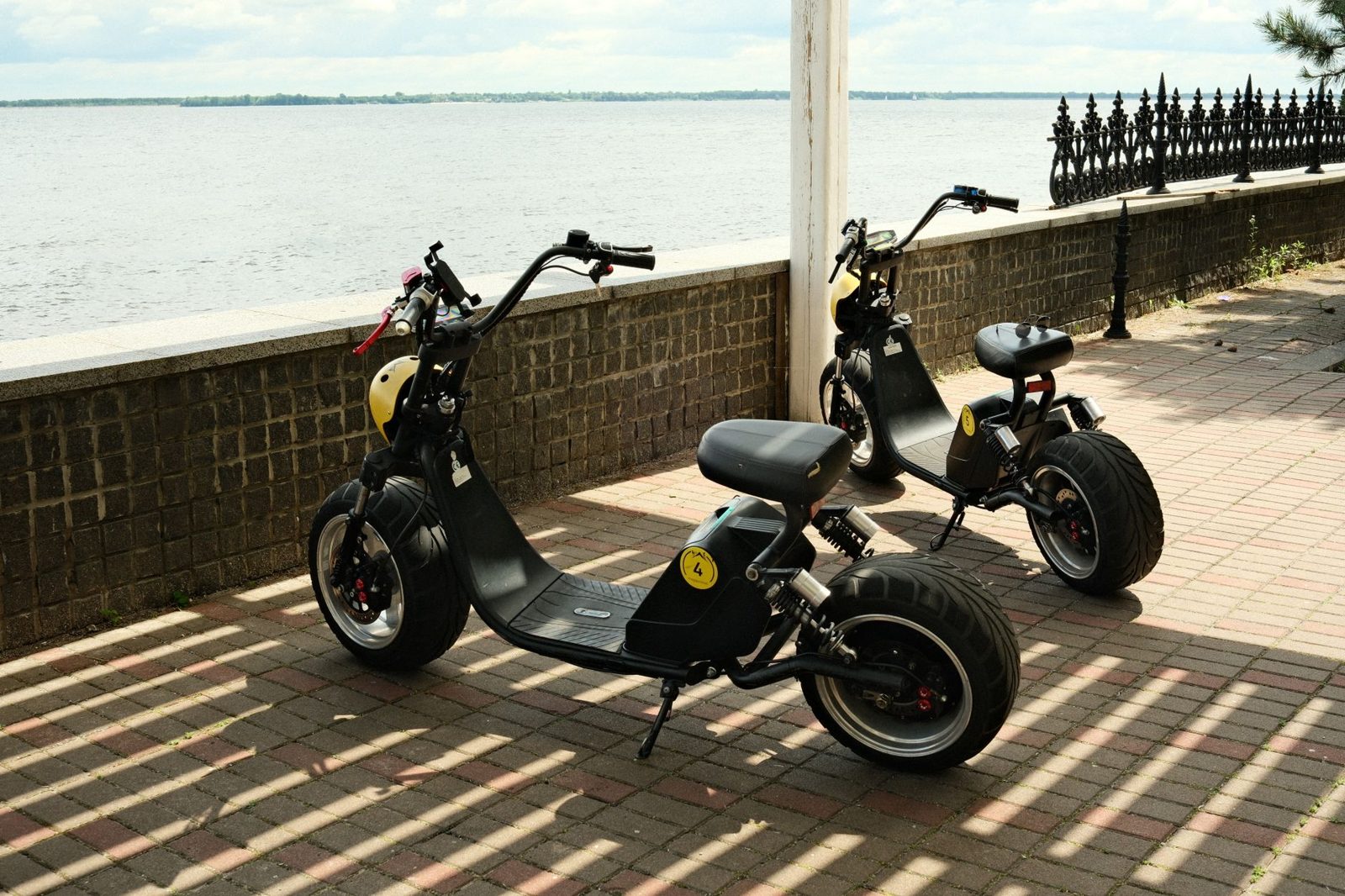
    A seated e-scooter is a two-wheeled scooter with a saddle, either built in or supplied as a removable accessory. You sit with your feet on the deck and steer with the handlebars. They are different from mobility scooters, which are designed for people with limited mobility, usually have three or four wheels, and are covered by separate rules.

    A real example

    The Razor EcoSmart Metro HD is one of the best-known seated designs. Razor lists the following:

    Spec Razor EcoSmart Metro HD
    Recommended age 16 and up
    Maximum rider weight 220lb (100kg)
    Motor 350W brushless rear hub motor
    Top speed Up to 15.5mph (25km/h)
    Range Up to 12 miles (19km) per charge
    Battery 36V sealed lead-acid (three 12V batteries)
    Tyres 16-inch pneumatic front and rear
    Seat Padded
    Weight 72.89lb (33.13kg)
    Brakes Hand-operated rear brake

    Two things stand out. First, the 16-inch tyres are much larger than the 8 to 12-inch wheels Consumer Reports says struggle on rough pavement. Second, the lead-acid battery makes it heavy for its range: at 33kg it weighs more than a typical lithium-ion commuter scooter such as Segway’s 24.3kg MAX G2, while offering a much shorter rated range.

    Pros of a seated scooter

    • Comfort: sitting spreads your weight and is less tiring than standing on longer trips.
    • Bigger wheels: many seated designs use larger tyres, which cope better with bumps.
    • Lower centre of mass: Consumer Reports identifies the standing position and higher centre of mass as reasons e-scooter falls tend to be head first. A seated riding position is lower, though it does not remove the risk of falling.
    • Rider size: a seated position can suit riders who find balancing on a narrow deck awkward, though you still need to check the maximum rider weight.

    Cons of a seated scooter

    • Weight and bulk: a seat post, bigger frame and larger wheels add weight. They are harder to lift and store.
    • Portability: seated scooters often do not fold as compactly, if at all.
    • Handling: sitting reduces your ability to absorb bumps with your legs, and you cannot step off as quickly.
    • Legal status: see below. This is the big one.

    How a seat affects the law

    • Ireland: the e-scooter rules that took effect on 20 May 2024 prohibit seats. A seated scooter is therefore not a legal e-scooter on Irish roads.
    • Ontario: e-scooters in the provincial pilot cannot have pedals, a seat or a basket, and riders must stand at all times.
    • Victoria: Victoria Police describes a legal e-scooter as having two wheels, a footboard and handlebar steering, with a 25km/h maximum speed and 45kg maximum weight. Check with the authorities whether a particular seated design qualifies.
    • UK: private e-scooters of any design cannot be ridden on public roads, pavements or cycle lanes. A seat does not change that.
    • Standards: the European standard for personal light electric vehicles, EN 17128, excludes vehicles with a seat that are not self-balancing.

    Some sellers offer seats as an add-on for standing scooters. Fitting one may make an otherwise compliant scooter non-compliant in places where seats are banned, so check before you buy the accessory.

    Lead-acid or lithium-ion?

    Older and budget seated designs, like the Metro HD, use sealed lead-acid batteries, which are heavy for the energy they store. Most modern scooters use lithium-ion, which is lighter but carries a well-documented fire risk if damaged, modified or charged wrongly. London Fire Brigade says there is on average an e-bike or e-scooter lithium-ion battery fire every two days in London. Whatever the chemistry, use only the manufacturer’s charger and follow the charging advice from the National Fire Chiefs Council: charge while awake, unplug when done, and never charge on an escape route.

    Where you can legally ride one

    The rules depend entirely on where you live, and they apply to every type of e-scooter, not just the fast ones.

    • UK: the government says it is against the law to use a privately owned e-scooter on public land. Private e-scooters count as motor vehicles, so they can only be used on private land with the landowner’s permission. Rental e-scooters in official trial areas are the legal exception, limited to 15.5mph and needing a full or provisional licence with category Q entitlement.
    • Ireland: e-scooters became legal on public roads on 20 May 2024, with a 20km/h maximum design speed, 400W power limit and 25kg weight limit, and seats are not allowed. Helmets and hi-vis became compulsory on 4 September 2026, and the minimum age of 16 was due to rise to 18 in early October 2026.
    • Australia: each state sets its own rules. Victoria defines a legal e-scooter as having a maximum speed of 25km/h and weighing no more than 45kg. Queensland caps e-scooters at 25km/h and 12km/h on footpaths, and from 31 August 2026 riders must be 16 with at least a learner licence.
    • Canada: rules are provincial and often local. Ontario’s pilot runs to 27 November 2029 and allows scooters up to 500W, 24km/h and 45kg only where a municipality has passed a bylaw.
    • US: Consumer Reports notes there is no federal safety standard for adult consumer e-scooters, and it tells riders to check local laws, which vary by state and city.

    Is a seated scooter right for you?

    If standing is the main thing putting you off e-scooters and you will ride on private land, or somewhere seated models are allowed, a seated scooter can be a comfortable option. If you want to ride on public roads in Ireland or Ontario, a seat rules the scooter out. And if a health condition limits your mobility, a mobility scooter designed for that purpose may be a better and more appropriate choice.

    Sources

    • Razor: EcoSmart Metro HD specifications (razor.com)
    • Segway: Ninebot KickScooter MAX G2 specifications (ap-en.segway.com)
    • Genorma: EN 17128:2020 Personal light electric vehicles, requirements and test methods (genorma.com)
    • Consumer Reports: We tested 13 electric scooters. We don’t recommend any (consumerreports.org)
    • London Fire Brigade: E-bikes and e-scooters fire safety advice (london-fire.gov.uk)
    • National Fire Chiefs Council: E-bikes and e-scooters fire safety guidance (nfcc.org.uk)
    • GOV.UK: E-scooter trials, guidance for users
    • GOV.UK: Guidance on powered transporters
    • RTE News: What are the new e-scooter regulations? (May 2024) (rte.ie)
    • RTE News: New helmet and high-vis e-scooter regulations in effect (September 2026) (rte.ie)
    • Victoria Police: Electric powered scooters (e-scooters) (police.vic.gov.au)
    • Queensland Government StreetSmarts: E-scooters, e-skateboards and e-unicycles (streetsmarts.initiatives.qld.gov.au)
    • Government of Ontario: Electric kick-style scooters (e-scooters) (ontario.ca)

  • Off-road and all-terrain e-scooters: what makes them different

    Off-road and all-terrain e-scooters: what makes them different

    Quick answer: off-road or all-terrain e-scooters have larger, grippier tyres, longer suspension, more ground clearance and usually more powerful motors and stronger brakes than city scooters. They are heavy and, in most places covered on this site, they can only be ridden on private land with the landowner’s permission.

    If you have a big garden, a farm, access to private tracks or simply rough ground near home, an all-terrain scooter can look very tempting. But the features that make it capable off-road also make it heavier, bulkier and, in many cases, faster than the legal definition of an e-scooter. This guide explains what to look for and what to be careful about.

    What makes a scooter “all-terrain”

    There is no official definition, but off-road scooters share some common features. Segway’s ZT3 Pro, which Segway markets as all-terrain, illustrates them well (figures as reported at launch):

    Feature Segway ZT3 Pro Why it matters off-road
    Tyres 11-inch tubeless all-terrain Bigger, treaded tyres grip loose surfaces and roll over bumps
    Suspension Telescopic front fork, rear swingarm coil suspension Keeps the wheels in contact with uneven ground
    Ground clearance About 6 inches Less chance of grounding the deck on rocks or roots
    Brakes Dual disc brakes More consistent stopping, including in mud and wet
    Motor 1,600W Power for climbing and soft surfaces
    Climbing 25% slope Steep tracks and banks
    Weight 65.5lb (about 30kg) The price of all of the above
    Water resistance IPX5 body, IPX7 battery Puddles and spray

    Segway also lists traction control and a maximum payload of 265lb (about 120kg). Its reported range is 43.5 miles in eco mode but 18.6 miles in sport mode, which shows how much harder riding cuts range.

    Tyres: the single biggest difference

    City scooters often have smooth 8 to 10-inch tyres. Consumer Reports points out that even on pavement, small 8 to 12-inch wheels struggle on rough surfaces. Off-road tyres are larger, wider and have an open tread pattern. Air-filled (pneumatic) or tubeless tyres are the norm, because solid tyres give very little grip or comfort off tarmac. Knobbly tyres can feel noisier and less precise on smooth roads, so a road-biased “hybrid” tread is a compromise if you ride both.

    Suspension and frame

    Off-road suspension has longer travel than the small springs on commuter scooters, and often uses swingarms or forks similar in principle to a bicycle’s. Larger, more capable scooters, such as Segway’s GT2 P, have dual-arm suspension front and rear with adjustable hydraulic damping. More suspension means more moving parts to maintain, so check bolts, bushings and pivots regularly.

    Brakes and control

    Loose surfaces make it easier to lock a wheel. Look for mechanical disc brakes on both wheels, and consider electronic anti-lock features where offered: Segway’s GT2 P, for example, adds an electronic ABS to the rear brake. Consumer Reports warns that braking while turning can make the rear wheel skid, which is even more likely on gravel or grass, so brake in a straight line where possible and keep speeds down.

    Power and speed

    Many off-road scooters are also high-performance scooters, with big single motors or two motors. The European safety standard for personal light electric vehicles, EN 17128, excludes vehicles designed to go faster than 25km/h, so a very fast off-road scooter is outside that standard altogether. Speed off-road also carries more risk: there are hidden holes, roots and loose stones, and help may be further away.

    Protective kit

    Consumer Reports’ advice for all e-scooter riders is to wear a properly fitted helmet as a minimum, and to add wrist guards and knee pads. On rough ground, where falls are more likely, a full set of protection makes even more sense. Ride with someone else or tell someone where you are going when riding on remote private land.

    Battery care after muddy rides

    Off-road riding exposes scooters to water, grit and knocks. A damaged lithium-ion battery can fail and catch fire. London Fire Brigade says damaged or faulty batteries are a serious fire hazard, and the National Fire Chiefs Council advises checking batteries regularly for damage. After a hard ride, let the scooter dry and cool before charging, check for dents or cracks in the battery housing, and never charge a battery that looks or smells wrong.

    Where you can legally ride one

    The rules depend entirely on where you live, and they apply to every type of e-scooter, not just the fast ones.

    • UK: the government says it is against the law to use a privately owned e-scooter on public land. Private e-scooters count as motor vehicles, so they can only be used on private land with the landowner’s permission. Rental e-scooters in official trial areas are the legal exception, limited to 15.5mph and needing a full or provisional licence with category Q entitlement.
    • Ireland: e-scooters became legal on public roads on 20 May 2024, with a 20km/h maximum design speed, 400W power limit and 25kg weight limit, and seats are not allowed. Helmets and hi-vis became compulsory on 4 September 2026, and the minimum age of 16 was due to rise to 18 in early October 2026.
    • Australia: each state sets its own rules. Victoria defines a legal e-scooter as having a maximum speed of 25km/h and weighing no more than 45kg. Queensland caps e-scooters at 25km/h and 12km/h on footpaths, and from 31 August 2026 riders must be 16 with at least a learner licence.
    • Canada: rules are provincial and often local. Ontario’s pilot runs to 27 November 2029 and allows scooters up to 500W, 24km/h and 45kg only where a municipality has passed a bylaw.
    • US: Consumer Reports notes there is no federal safety standard for adult consumer e-scooters, and it tells riders to check local laws, which vary by state and city.

    Is an off-road scooter right for you?

    • Yes, if: you have regular, lawful access to private land with rough surfaces, somewhere secure to store a heavy scooter, and you are prepared to maintain suspension and brakes.
    • Probably not, if: you mainly want to commute, need to carry the scooter, or you are hoping to ride on public paths and trails. Off-road ability does not make a scooter legal in places where e-scooters are not allowed.

    Sources

    • BGR: Segway announces new ZT3 Pro all-terrain electric scooter (bgr.com)
    • Segway: eKickScooter GT2 P specifications (ee-en.segway.com)
    • Segway: Ninebot KickScooter MAX G2 specifications (ap-en.segway.com)
    • Consumer Reports: We tested 13 electric scooters. We don’t recommend any (consumerreports.org)
    • Genorma: EN 17128:2020 Personal light electric vehicles, requirements and test methods (genorma.com)
    • London Fire Brigade: E-bikes and e-scooters fire safety advice (london-fire.gov.uk)
    • National Fire Chiefs Council: E-bikes and e-scooters fire safety guidance (nfcc.org.uk)
    • GOV.UK: E-scooter trials, guidance for users
    • GOV.UK: Guidance on powered transporters
    • RTE News: What are the new e-scooter regulations? (May 2024) (rte.ie)
    • RTE News: New helmet and high-vis e-scooter regulations in effect (September 2026) (rte.ie)
    • Victoria Police: Electric powered scooters (e-scooters) (police.vic.gov.au)
    • Queensland Government StreetSmarts: E-scooters, e-skateboards and e-unicycles (streetsmarts.initiatives.qld.gov.au)
    • Government of Ontario: Electric kick-style scooters (e-scooters) (ontario.ca)

  • Long-range e-scooters: how far will they really go?

    Long-range e-scooters: how far will they really go?

    Quick answer: a long-range e-scooter is simply one with a big battery. Headline range figures are measured with a light rider, at mild temperatures, at modest speed on flat pavement, so expect less in real riding. The bigger battery also means more weight, longer charging and, often, a faster scooter than the law allows on public roads.

    Range anxiety is one of the most common reasons people upgrade their scooter. But “long-range” is a marketing term, not a category with a definition. What you are really buying is battery capacity, measured in watt-hours (Wh). Understanding that number, and the conditions behind the range claim, will tell you far more than the headline figure in kilometres or miles.

    Battery capacity is what really matters

    Watt-hours measure how much energy the battery stores. Other things being equal, twice the watt-hours gives roughly twice the range. Some examples from Segway’s own spec pages show how much batteries vary:

    Scooter Battery Weight Manufacturer range claim
    Ninebot Air T15 167Wh 10.5kg About 12km at 12km/h
    Ninebot MAX G2 551Wh 24.3kg About 70km at 12km/h, about 50km at 25km/h
    GT2 P Not listed on the page we checked Not listed on the page we checked Up to 90km at an average 20km/h

    All three figures come with the same kind of footnote: tested with a full battery, a 75kg (165lb) load, at 25°C, on pavement, at a stated average speed. Where a manufacturer does not publish the battery size in Wh, look for voltage (V) and amp-hours (Ah) in the specs or manual. Multiplying them gives the watt-hours.

    Why real-world range is lower

    The MAX G2 figures above show the effect of speed alone: the same battery is rated for about 70km at 12km/h but about 50km at 25km/h. Several other factors eat into range in everyday riding:

    • Rider weight: test figures commonly assume a 75kg load. If you weigh more, or carry a heavy bag, expect less.
    • Temperature: range tests are run at 25°C. Lithium-ion batteries deliver less in the cold, and London Fire Brigade notes that heat, cold and rain all affect battery performance.
    • Hills and stops: climbing and repeated acceleration use far more energy than cruising on the flat.
    • Tyre pressure and surface: soft tyres, gravel and grass all add rolling resistance.
    • Riding mode: eco modes cap speed and power to stretch range. Sport or boost modes do the opposite.
    • Battery age: capacity declines as batteries age.

    Consumer Reports, which tested 13 scooters in 2026, found typical range in its testing of roughly 5 to 17 miles. That is a useful reminder that many scooters get well under their headline claim in practice.

    What the extra range costs you

    Weight

    Batteries are heavy. Going from the Air T15 to the MAX G2 more than doubles the weight, from 10.5kg to 24.3kg. Long-range scooters built around even bigger batteries are heavier again. Segway’s ZT3 Pro, for example, weighs 65.5lb (about 30kg). If you have to carry the scooter at all, this matters.

    Charging time

    Bigger batteries take longer to fill with a standard charger. Segway quotes about 6 hours for the MAX G2. That has safety implications, because fire services advise charging only while you are awake and alert, not overnight or while you are out.

    Speed and legality

    Many long-range scooters are also high-performance models with top speeds far above legal limits. Segway’s GT2 P, for example, is rated for a 70km/h top speed. In Ireland the legal e-scooter limit is a 20km/h design speed and 25kg; in Victoria it is 25km/h and 45kg; in Ontario 24km/h and 45kg. A scooter outside those limits is not a legal e-scooter there, however useful its range.

    How to choose the right amount of range

    1. Work out your longest regular trip, return journey included.
    2. Look up the manufacturer’s range figure at the speed you will actually ride, not the eco-mode figure.
    3. Knock off a generous margin for winter, hills and your own weight if you are above the test load.
    4. If the result still covers your trip with room to spare, you do not need a bigger battery.
    5. If it does not, consider whether charging at your destination is an option before buying a heavier scooter.

    Looking after a big battery

    The larger the battery, the more energy is involved if something goes wrong. London Fire Brigade says there is on average a fire from a lithium-ion battery in an e-bike or e-scooter every two days in London, and that many happen during charging. Practical steps from UK fire services and the government include:

    • Use only the manufacturer’s charger and never modify or tamper with the battery.
    • Charge while you are awake, unplug when finished, and do not cover the charger.
    • Do not charge or store the scooter on an escape route such as a hallway.
    • Fit smoke alarms where you charge; the National Fire Chiefs Council suggests heat alarms in garages and kitchens.
    • Stop using a battery that is swollen, leaking, discoloured, dented, unusually hot, or smells odd. The City of Berkeley lists these as warning signs.

    Where you can legally ride one

    The rules depend entirely on where you live, and they apply to every type of e-scooter, not just the fast ones.

    • UK: the government says it is against the law to use a privately owned e-scooter on public land. Private e-scooters count as motor vehicles, so they can only be used on private land with the landowner’s permission. Rental e-scooters in official trial areas are the legal exception, limited to 15.5mph and needing a full or provisional licence with category Q entitlement.
    • Ireland: e-scooters became legal on public roads on 20 May 2024, with a 20km/h maximum design speed, 400W power limit and 25kg weight limit, and seats are not allowed. Helmets and hi-vis became compulsory on 4 September 2026, and the minimum age of 16 was due to rise to 18 in early October 2026.
    • Australia: each state sets its own rules. Victoria defines a legal e-scooter as having a maximum speed of 25km/h and weighing no more than 45kg. Queensland caps e-scooters at 25km/h and 12km/h on footpaths, and from 31 August 2026 riders must be 16 with at least a learner licence.
    • Canada: rules are provincial and often local. Ontario’s pilot runs to 27 November 2029 and allows scooters up to 500W, 24km/h and 45kg only where a municipality has passed a bylaw.
    • US: Consumer Reports notes there is no federal safety standard for adult consumer e-scooters, and it tells riders to check local laws, which vary by state and city.

    The bottom line

    Buy range you will use, not range that looks good on a spec sheet. A scooter with a realistic buffer over your daily trip will serve you better than a heavy, fast, long-range model that you struggle to store, charge safely or ride legally.

    Sources

    • Segway: Ninebot KickScooter MAX G2 specifications (ap-en.segway.com)
    • Segway: eKickScooter GT2 P specifications (ee-en.segway.com)
    • BGR: Segway announces new ZT3 Pro all-terrain electric scooter (bgr.com)
    • Segway: Ninebot KickScooter Air T15 specifications (ap-en.segway.com)
    • Consumer Reports: We tested 13 electric scooters. We don’t recommend any (consumerreports.org)
    • London Fire Brigade: E-bikes and e-scooters fire safety advice (london-fire.gov.uk)
    • National Fire Chiefs Council: E-bikes and e-scooters fire safety guidance (nfcc.org.uk)
    • GOV.UK: Government safety message on e-bikes and e-scooters
    • City of Berkeley: Reduce lithium-ion battery fire risk (berkeleyca.gov)
    • GOV.UK: E-scooter trials, guidance for users
    • GOV.UK: Guidance on powered transporters
    • RTE News: What are the new e-scooter regulations? (May 2024) (rte.ie)
    • RTE News: New helmet and high-vis e-scooter regulations in effect (September 2026) (rte.ie)
    • Victoria Police: Electric powered scooters (e-scooters) (police.vic.gov.au)
    • Queensland Government StreetSmarts: E-scooters, e-skateboards and e-unicycles (streetsmarts.initiatives.qld.gov.au)
    • Government of Ontario: Electric kick-style scooters (e-scooters) (ontario.ca)
  • Lightweight and folding e-scooters: how light is light enough?

    Lightweight and folding e-scooters: how light is light enough?

    Quick answer: lightweight e-scooters weigh roughly half as much as a typical commuter model, which makes them far easier to carry on stairs, trains and buses. The price is a smaller battery, lower power, smaller wheels and often lower rider weight limits. They suit short trips on smooth surfaces, combined with public transport.

    Almost every electric scooter folds, so “folding” on its own tells you very little. What matters is how heavy the scooter is, how small it gets when folded, and how quickly and securely the folding mechanism works. If you have to carry a scooter regularly, a few kilograms makes a real difference to whether you actually use it.

    The weight trade-off in real numbers

    Comparing two scooters from the same manufacturer shows what you give up. These are Segway’s own published figures.

    Spec Ninebot Air T15 (lightweight) Ninebot MAX G2 (commuter)
    Weight 10.5kg 24.3kg
    Motor 250W nominal 450W rated, 900W maximum
    Battery 167Wh 551Wh
    Top speed About 20km/h 25km/h
    Rated range About 12km at 12km/h About 70km at 12km/h
    Tyres 7.5-inch front, 6-inch rear, solid rubber 10-inch self-sealing tubeless
    Water resistance IPX4 IPX5 body, IPX7 battery
    Rider load 30 to 100kg Up to 120kg

    Both range figures were measured with a 75kg load at 25°C on pavement. The Air T15 is less than half the weight, but its battery is under a third of the size, and its rated range at the same speed is much shorter. Segway also lists a rider age range of 14 to 60 and a height range of 130 to 200cm for the Air T15, which is a reminder to check the manufacturer’s rider limits, not just the maximum weight.

    Where the weight is saved

    • Frame material: Segway says 90% of the Air T15’s metal parts, including the frame, are magnesium alloy, which is lighter than the aluminium used on many scooters.
    • Battery: the battery is one of the heaviest parts of a scooter, so light scooters carry smaller ones.
    • Motor and wheels: smaller hub motors and smaller wheels save weight but reduce hill-climbing and comfort.
    • Suspension: many lightweight scooters have little or none. Segway does not list suspension for the Air T15.

    Small wheels: the biggest compromise

    Consumer Reports, which tested 13 scooters in 2026 and recommended none, says small wheels of 8 to 12 inches struggle on rough pavement, and that the standing position means riders tend to fall forwards. Wheels smaller than that, as found on many ultra-light scooters, make potholes, drain covers and kerb edges even more of a hazard. Solid tyres never go flat but transmit more vibration and can have less grip in the wet. If your route is rough, a light scooter may be the wrong tool.

    Braking on lightweight scooters

    Lightweight models sometimes use simpler braking. Segway lists the Air T15’s braking as electronic braking combined with stepping on the rear fender. That can work at modest speeds on dry surfaces, but it is less reassuring in the wet than a hand-operated mechanical brake. Wherever you ride, practise emergency stops before using the scooter around other people.

    Folding: what to check

    • Folded size: Segway lists the Air T15 at 1,024 x 202 x 223mm folded. Measure your car boot, desk space or luggage rack before buying.
    • Latch security: the folding joint takes a lot of load. It should lock firmly with no play in the stem.
    • Carry point: check there is a comfortable place to grip the folded scooter.
    • Rules on public transport: operators set their own policies on carrying e-scooters, and some ban them. Check before you rely on one for a mixed journey.

    Range: be realistic

    With a battery of under 200Wh, you should not expect much more than the manufacturer’s rated range, and you should expect less in cold weather, on hills or if you weigh more than the 75kg test rider. For a light scooter, the rated range is best treated as a ceiling. Choose one whose rated range is comfortably more than your longest planned trip.

    Battery safety still applies

    A small battery is still a lithium-ion battery. London Fire Brigade says there is on average a fire from a lithium-ion battery in an e-bike or e-scooter every two days in London. The National Fire Chiefs Council advises charging only while you are awake, using the manufacturer’s charger, not covering the charger and not storing scooters on escape routes. The government’s safety message says to buy from a known seller and never modify or tamper with the battery.

    Where you can legally ride one

    The rules depend entirely on where you live, and they apply to every type of e-scooter, not just the fast ones.

    • UK: the government says it is against the law to use a privately owned e-scooter on public land. Private e-scooters count as motor vehicles, so they can only be used on private land with the landowner’s permission. Rental e-scooters in official trial areas are the legal exception, limited to 15.5mph and needing a full or provisional licence with category Q entitlement.
    • Ireland: e-scooters became legal on public roads on 20 May 2024, with a 20km/h maximum design speed, 400W power limit and 25kg weight limit, and seats are not allowed. Helmets and hi-vis became compulsory on 4 September 2026, and the minimum age of 16 was due to rise to 18 in early October 2026.
    • Australia: each state sets its own rules. Victoria defines a legal e-scooter as having a maximum speed of 25km/h and weighing no more than 45kg. Queensland caps e-scooters at 25km/h and 12km/h on footpaths, and from 31 August 2026 riders must be 16 with at least a learner licence.
    • Canada: rules are provincial and often local. Ontario’s pilot runs to 27 November 2029 and allows scooters up to 500W, 24km/h and 45kg only where a municipality has passed a bylaw.
    • US: Consumer Reports notes there is no federal safety standard for adult consumer e-scooters, and it tells riders to check local laws, which vary by state and city.

    Who should buy a lightweight e-scooter?

    • Good fit: short, smooth trips where the scooter spends part of the journey being carried, such as the last mile from a station, and where it is legal to ride.
    • Poor fit: long commutes, hilly routes, rough roads, heavier riders near the maximum load, or daily riding in heavy rain.

    If you are torn, weigh the scooter you are considering against something familiar, such as a full suitcase, and imagine carrying it up your stairs twice a day. That usually settles the question.

    Sources

    • Segway: Ninebot KickScooter Air T15 specifications (ap-en.segway.com)
    • Segway: Ninebot KickScooter MAX G2 specifications (ap-en.segway.com)
    • Consumer Reports: We tested 13 electric scooters. We don’t recommend any (consumerreports.org)
    • Applus+ Keystone: IEC 60529 Ingress Protection (IP code) (keystonecompliance.com)
    • London Fire Brigade: E-bikes and e-scooters fire safety advice (london-fire.gov.uk)
    • National Fire Chiefs Council: E-bikes and e-scooters fire safety guidance (nfcc.org.uk)
    • GOV.UK: Government safety message on e-bikes and e-scooters
    • GOV.UK: E-scooter trials, guidance for users
    • GOV.UK: Guidance on powered transporters
    • RTE News: What are the new e-scooter regulations? (May 2024) (rte.ie)
    • RTE News: New helmet and high-vis e-scooter regulations in effect (September 2026) (rte.ie)
    • Victoria Police: Electric powered scooters (e-scooters) (police.vic.gov.au)
    • Queensland Government StreetSmarts: E-scooters, e-skateboards and e-unicycles (streetsmarts.initiatives.qld.gov.au)
    • Government of Ontario: Electric kick-style scooters (e-scooters) (ontario.ca)

  • E-scooters for kids and teens: age guidance, speed limits and safety standards

    E-scooters for kids and teens: age guidance, speed limits and safety standards

    Quick answer: choose a scooter whose manufacturer age and height range fits your child, with a low top speed and a speed-limited learner mode, and ride only where it is legal. In the UK a child’s e-scooter, like an adult’s, can only be used on private land with permission. In Ireland, Victoria and Ontario the minimum age for public roads is 16, rising to 18 in Ireland, and Queensland allows 12 to 15-year-olds only under supervision.

    Electric scooters are a popular present, but children’s models sit in a legal and safety grey area. There is no single “kids’ e-scooter” category in law, and the standards that apply depend on where you live. This guide explains the age ratings manufacturers use, how speed-limiting works, which safety marks to look for and, most importantly, where a child can actually ride.

    Manufacturer age ratings: a real example

    Reputable manufacturers publish an age and height range for each model. Segway’s ZING range shows how this works in practice:

    Spec Ninebot ZING C8 Ninebot ZING C10
    Recommended age 6 to 12 years 8 to 14 years
    Rider height 115 to 145cm 130 to 160cm
    Top speed 16km/h 16km/h
    Speed modes Safe (10km/h), Cruise, Turbo Safe (10km/h), Cruise, Turbo
    Range Up to 10km (about 40 minutes) Up to 10km (about 40 minutes)
    Weight 9kg 9.5kg
    Motor 120W 120W
    Tyres and brake Solid rubber tyres, hand brake Solid rubber tyres, hand brake
    Water resistance IPX4 IPX4

    Compare that with adult models. Segway gives its lightweight Air T15 a rider age range of 14 to 60, and Razor recommends its seated EcoSmart Metro HD for ages 16 and up. Always follow the manufacturer’s age, height and weight limits: they reflect the size of the deck, the reach to the brakes and the speed the scooter is designed for.

    Speed-limiting and learner modes

    A learner or “safe” mode is one of the most useful features on a child’s scooter. On the ZING models, Safe mode limits speed to 10km/h, against a 16km/h maximum. When comparing scooters, look for:

    • A low maximum speed that suits your child’s age and experience.
    • A selectable beginner mode, ideally one a parent can control.
    • Gentle acceleration, so the scooter does not jolt forwards.
    • A hand brake your child can reach and squeeze firmly.

    Consumer Reports notes that top speeds on e-scooters generally have risen sharply since 2022, with 20mph now common and some models reaching 28mph. Buying an adult scooter “to grow into” is not a good idea for a younger child.

    Safety standards to look for

    UL 2272 (US and Canada)

    UL 2272 is the standard for electrical systems in personal e-mobility devices. The US Consumer Product Safety Commission has urged manufacturers, importers and retailers to certify micromobility products, including e-scooters, to UL 2272, with certification from an accredited testing laboratory. It covers the electrical and battery system, which is where fire risk comes from. UL 2849 is the equivalent standard for e-bikes, not scooters.

    ASTM F2641 (US)

    ASTM F2641 is a consumer safety specification for recreational powered scooters and pocket bikes, covering things such as acceleration, braking and electrical safety, and aimed at older children, teens and adults. Consumer Reports notes that youth models are one of the few categories in the US with an established ASTM standard, whereas adult consumer e-scooters have no federal safety standard.

    EN 17128 (Europe, UK and Ireland)

    EN 17128 sets safety requirements and test methods for personal light electric vehicles such as e-scooters. It excludes toys and vehicles designed to go faster than 25km/h. That means some very low-powered children’s scooters may be treated as toys rather than falling under EN 17128, so ask the seller which standard a product has been tested to.

    Where can children legally ride?

    • UK: private e-scooters are motor vehicles in law and it is against the law to use one on public land, whatever the rider’s age. A child’s scooter can only be used on private land with the landowner’s permission. Rental trial scooters need a full or provisional licence with category Q entitlement, which rules out young children.
    • Ireland: nobody under 16 may use an e-scooter in a public place under the rules introduced in May 2024, and that age was due to rise to 18 in early October 2026. Helmets and hi-vis became compulsory on 4 September 2026.
    • Queensland: from 31 August 2026 riders must be 16 with at least a learner licence. Children aged 12 to 17 can ride under the supervision of a parent or caregiver, and parents can be fined if under-16s ride illegally.
    • Victoria: the minimum age to ride an e-scooter is 16.
    • Ontario: riders in the pilot must be at least 16, and riders under 18 must wear a bicycle helmet.
    • US: rules vary by state and city, so check local laws before your child rides anywhere public.

    Protective kit

    Consumer Reports cites research suggesting children make up more than 45% of e-scooter injuries in the US, and that helmet use among e-scooter riders is very low. Its advice is a properly fitted helmet as a minimum, plus wrist guards and knee and elbow pads. For children, that is non-negotiable. Also teach them to brake in a straight line, as Consumer Reports warns braking while turning can cause the rear wheel to skid.

    Charging a child’s scooter safely

    A kids’ scooter still has a lithium-ion battery. London Fire Brigade says there is on average a fire from an e-bike or e-scooter lithium-ion battery every two days in London. Keep charging an adult job:

    • Use only the manufacturer’s charger. The government advises never mixing chargers and batteries.
    • Charge while an adult is awake and at home, and unplug when finished.
    • Do not charge in a child’s bedroom or on an escape route such as a hallway.
    • Register the product with the manufacturer so you hear about recalls.

    Checklist for parents

    1. Is there somewhere legal for your child to ride it?
    2. Does the manufacturer’s age, height and weight range fit your child now?
    3. Is there a low-speed learner mode?
    4. Can your child reach and operate the brake?
    5. Is it tested to a recognised standard, such as UL 2272 in North America?
    6. Have you bought a helmet and pads at the same time?
    7. Do you have a safe place to charge it?

    Sources

    • Segway: Ninebot eKickScooter ZING C8 and C10 (eu-en.segway.com)
    • Segway: Ninebot KickScooter Air T15 specifications (ap-en.segway.com)
    • Razor: EcoSmart Metro HD specifications (razor.com)
    • Consumer Reports: We tested 13 electric scooters. We don’t recommend any (consumerreports.org)
    • US CPSC: Letter to micromobility manufacturers on UL 2272 and UL 2849 (December 2022) (cpsc.gov)
    • Genorma: EN 17128:2020 Personal light electric vehicles, requirements and test methods (genorma.com)
    • ACT Lab: Understanding ASTM F2264 and ASTM F2641 for scooters (act-lab.com)
    • GOV.UK: Guidance on powered transporters
    • GOV.UK: E-scooter trials, guidance for users
    • RTE News: What are the new e-scooter regulations? (May 2024) (rte.ie)
    • RTE News: New helmet and high-vis e-scooter regulations in effect (September 2026) (rte.ie)
    • Queensland Government StreetSmarts: E-scooters, e-skateboards and e-unicycles (streetsmarts.initiatives.qld.gov.au)
    • Victoria Police: Electric powered scooters (e-scooters) (police.vic.gov.au)
    • Government of Ontario: Electric kick-style scooters (e-scooters) (ontario.ca)
    • London Fire Brigade: E-bikes and e-scooters fire safety advice (london-fire.gov.uk)
    • National Fire Chiefs Council: E-bikes and e-scooters fire safety guidance (nfcc.org.uk)
    • GOV.UK: Government safety message on e-bikes and e-scooters
  • Commuter e-scooters: what to look for in an everyday electric scooter

    Commuter e-scooters: what to look for in an everyday electric scooter

    Quick answer: a good commuter e-scooter has enough real-world range for your round trip with plenty to spare, 10-inch or larger tyres, two independent brakes, proper lights, some water resistance and a weight you can manage. It also needs to be legal where you ride: in the UK, private e-scooters cannot be used on public roads.

    A commuter scooter has one job: get you to work and back, every day, in whatever weather your climate throws at it. That sounds simple, but it means the dull specs matter more than the exciting ones. Top speed is largely irrelevant when most legal limits sit between 20 and 25km/h. Tyres, brakes, lights and a battery that still gets you home in January matter much more.

    A real example: what a mid-range commuter looks like

    To make the specs concrete, here is what Segway lists for its Ninebot MAX G2, a popular commuter model. We are not recommending it over anything else, just using it as a reference point.

    Spec Segway Ninebot MAX G2 (manufacturer figures)
    Weight 24.3kg
    Motor 450W rated, 900W maximum
    Battery 551Wh
    Top speed 25km/h
    Range About 50km at 25km/h, 55km at 20km/h, 70km at 12km/h
    Range test conditions Full battery, 75kg load, 25°C, on pavement
    Tyres 10-inch self-sealing tubeless
    Brakes Front drum plus rear electronic brake
    Suspension Hydraulic front, double rear
    Water resistance IPX5 scooter body, IPX7 battery pack
    Maximum load 120kg
    Charging time About 6 hours

    Notice how the range changes with speed. The same battery gives about 70km at 12km/h but only about 50km at 25km/h. That pattern holds for every scooter, which is why you should always read the small print under the range figure.

    Range: plan for the bad days

    Manufacturers measure range under kind conditions: a fairly light rider, mild temperatures and flat pavement. Your commute probably includes hills, stop-start junctions, a headwind and, for half the year, cold weather. A sensible approach is to work out your round-trip distance and choose a scooter whose rated range at your likely speed is comfortably more than that, so you are not relying on the last few percent of charge. If you can charge at work, you have more flexibility; if you cannot, build in a bigger buffer.

    Tyres and suspension

    Commuting means potholes, drain covers and patched tarmac. Consumer Reports, which tested 13 e-scooters in 2026 and did not recommend any of them, highlights that small wheels of 8 to 12 inches struggle on rough pavement, and that the standing position makes falls more serious. For commuting:

    • Tyre size: 10 inches is a reasonable minimum for city roads. Bigger wheels roll over bumps more easily.
    • Tyre type: air-filled (pneumatic) tyres grip and absorb bumps better but can puncture. Tubeless and self-sealing designs reduce the hassle. Solid tyres never puncture but give a harsher ride.
    • Suspension: not essential on smooth roads, but it makes a big difference to comfort and control on poor surfaces.

    Brakes

    Look for two independent brakes, ideally at least one mechanical brake (drum or disc) rather than relying only on the motor’s electronic braking. Ireland’s rules, for example, require two independent braking systems on any e-scooter used on public roads. Consumer Reports also warns that braking while turning can make the rear wheel skid, so practise braking in a straight line before you ride in traffic.

    Lights and visibility

    Most commutes include some riding in the dark for part of the year. Front and rear lights are required on e-scooters in Ireland, Victoria, Queensland and Ontario. Built-in lights on many scooters are fine for being seen but not always for seeing the road, so consider adding a brighter front light. Since 4 September 2026, riders in Ireland must also wear hi-vis and a helmet.

    Water resistance and the IP rating

    IP ratings come from the international standard IEC 60529. The first digit is protection against dust and solids, the second against water, and an “X” means that part was not rated. On the water scale, 4 means protection against splashing, 5 against water jets, 6 against powerful jets and 7 against temporary immersion up to one metre. For all-weather commuting, a higher water rating gives you more margin. An IP rating describes a laboratory test rather than a promise about everyday use, so also check what the manual and warranty say about riding in rain and cleaning the scooter.

    Weight and folding

    A commuter scooter in the 20 to 25kg range is fine if you ride door to door and store it on the ground floor. It becomes a real problem if you have stairs at either end or want to take it on a train. If that is you, read our guide to lightweight and folding scooters and weigh up whether a shorter range is a price worth paying.

    Charging and storing it at home or work

    London Fire Brigade says there is on average a fire from a lithium-ion battery in an e-bike or e-scooter every two days in London, and that many happen during charging. The National Fire Chiefs Council advises charging while you are awake and alert, never overnight or while you are out, using only the manufacturer’s charger, and not storing scooters on escape routes such as hallways. The government’s safety message adds: buy from a known seller, follow the manufacturer’s instructions and unplug the charger once charging has finished.

    Where you can legally ride one

    The rules depend entirely on where you live, and they apply to every type of e-scooter, not just the fast ones.

    • UK: the government says it is against the law to use a privately owned e-scooter on public land. Private e-scooters count as motor vehicles, so they can only be used on private land with the landowner’s permission. Rental e-scooters in official trial areas are the legal exception, limited to 15.5mph and needing a full or provisional licence with category Q entitlement.
    • Ireland: e-scooters became legal on public roads on 20 May 2024, with a 20km/h maximum design speed, 400W power limit and 25kg weight limit, and seats are not allowed. Helmets and hi-vis became compulsory on 4 September 2026, and the minimum age of 16 was due to rise to 18 in early October 2026.
    • Australia: each state sets its own rules. Victoria defines a legal e-scooter as having a maximum speed of 25km/h and weighing no more than 45kg. Queensland caps e-scooters at 25km/h and 12km/h on footpaths, and from 31 August 2026 riders must be 16 with at least a learner licence.
    • Canada: rules are provincial and often local. Ontario’s pilot runs to 27 November 2029 and allows scooters up to 500W, 24km/h and 45kg only where a municipality has passed a bylaw.
    • US: Consumer Reports notes there is no federal safety standard for adult consumer e-scooters, and it tells riders to check local laws, which vary by state and city.

    Commuter checklist

    • Rated range at your normal speed comfortably exceeds your round trip.
    • Tyres of at least 10 inches, pneumatic or tubeless if your roads are rough.
    • Two independent brakes, ideally including a mechanical one.
    • Front and rear lights, and reflectors.
    • A water-resistance rating you are comfortable with for your climate.
    • A weight you can actually lift where you need to.
    • A maximum load rating that covers you plus your bag.
    • Bought from a reputable seller, with the manufacturer’s charger.
    • Legal for the roads you plan to use.

    Sources

    • Segway: Ninebot KickScooter MAX G2 specifications (ap-en.segway.com)
    • Consumer Reports: We tested 13 electric scooters. We don’t recommend any (consumerreports.org)
    • Applus+ Keystone: IEC 60529 Ingress Protection (IP code) (keystonecompliance.com)
    • London Fire Brigade: E-bikes and e-scooters fire safety advice (london-fire.gov.uk)
    • National Fire Chiefs Council: E-bikes and e-scooters fire safety guidance (nfcc.org.uk)
    • GOV.UK: Government safety message on e-bikes and e-scooters
    • GOV.UK: E-scooter trials, guidance for users
    • GOV.UK: Guidance on powered transporters
    • RTE News: What are the new e-scooter regulations? (May 2024) (rte.ie)
    • RTE News: New helmet and high-vis e-scooter regulations in effect (September 2026) (rte.ie)
    • Victoria Police: Electric powered scooters (e-scooters) (police.vic.gov.au)
    • Queensland Government StreetSmarts: E-scooters, e-skateboards and e-unicycles (streetsmarts.initiatives.qld.gov.au)
    • Government of Ontario: Electric kick-style scooters (e-scooters) (ontario.ca)
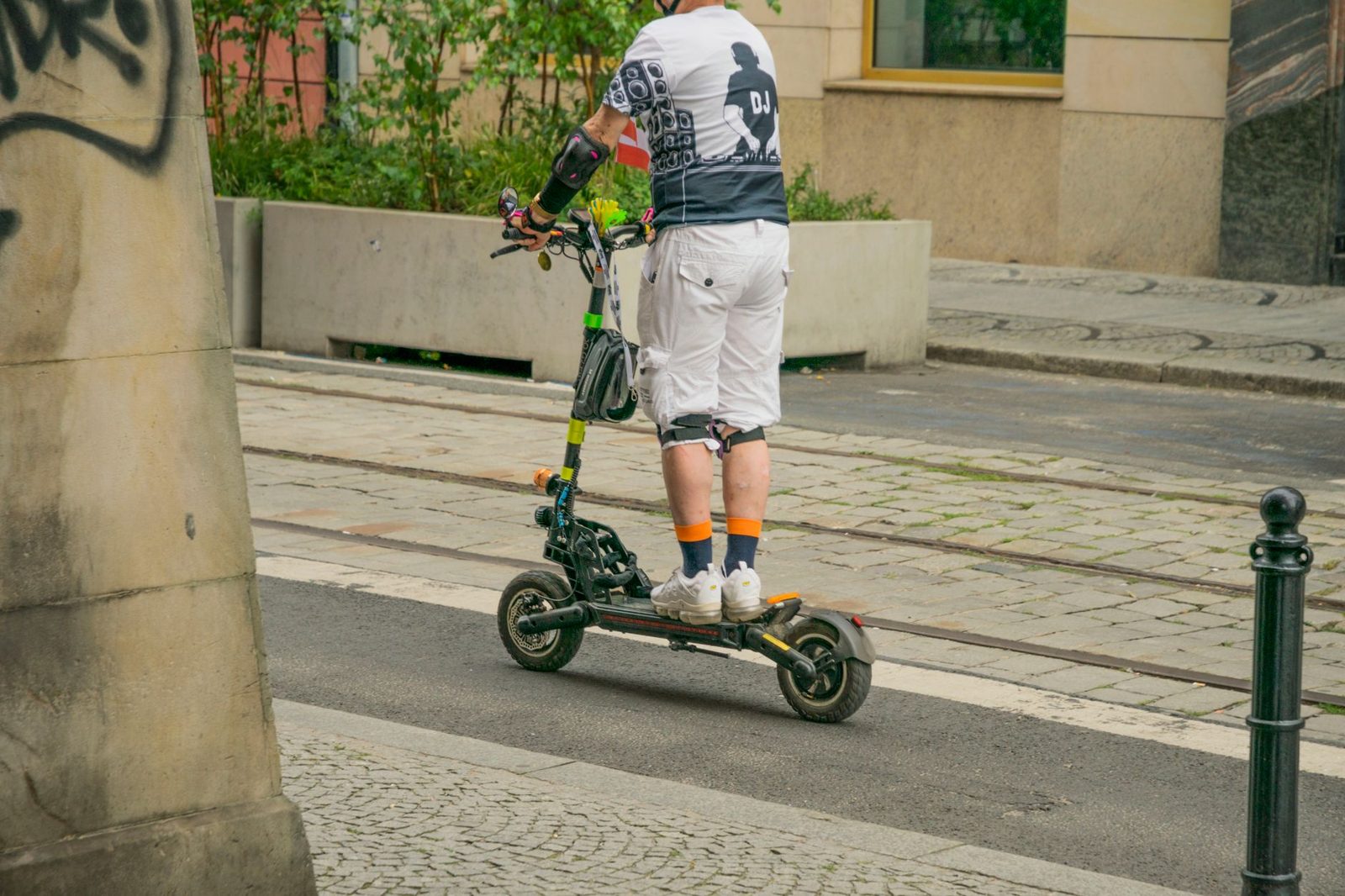
  • Dual-motor performance e-scooters: power, speed and the legal reality

    Dual-motor performance e-scooters: power, speed and the legal reality

    Quick answer: a dual-motor e-scooter has a motor in each wheel, giving two-wheel drive, strong acceleration and better hill-climbing. Most are heavy, expensive and capable of speeds far above the legal e-scooter limits in the UK, Ireland, Canada and Australia, so in practice they are for private land. Their braking, tyres and protective kit need to match their speed.

    Performance scooters are the fastest-growing corner of the e-scooter market. Consumer Reports notes that in 2022 most scooters it saw were limited to 15.5mph, but that 20mph is now a common top speed and some models reach 28mph. Dual-motor machines go much further than that. Before you look at one, it helps to understand what the second motor actually does, and what it means for safety and legality.

    What a second motor does

    • Traction: driving both wheels spreads the power, which helps on loose surfaces and steep slopes.
    • Acceleration: two motors can deliver much more total power.
    • Hill-climbing: more power means less slowing down on steep gradients.
    • Flexibility: many dual-motor scooters let you switch between single and dual drive to save battery.

    A real example

    Segway’s GT2 P is a good illustration of how far performance scooters have moved from commuter models. From Segway’s spec page:

    Spec Segway GT2 P Segway Ninebot MAX G2 (commuter, for comparison)
    Drive Dual motor, maximum 6,000W Single rear motor, 450W rated, 900W maximum
    Top speed 70km/h 25km/h
    Acceleration 0 to 48km/h in 3.9 seconds (boost mode) Not quoted
    Range claim Up to 90km at an average 20km/h About 50km at 25km/h
    Brakes Front and rear disc, rear electronic ABS Front drum plus rear electronic brake
    Suspension Front and rear dual-arm, adjustable hydraulic damping Hydraulic front, double rear
    Tyres 11-inch self-healing tubeless, 92mm wide 10-inch self-sealing tubeless
    Climbing 30% incline Not quoted here
    Maximum load 150kg 120kg

    Both range figures were tested with a 75kg load at 25°C on pavement. Note that the GT2 P’s range claim is at an average of 20km/h, well under its top speed. Riding it fast will use far more battery.

    The legal reality

    This is the most important section. A 70km/h scooter is not a legal e-scooter anywhere covered by this site:

    • Ireland limits e-scooters to a 20km/h design speed, 400W and 25kg.
    • Victoria defines an e-scooter as having a maximum speed of 25km/h and weighing no more than 45kg. Devices outside the definition are treated as unregistered motor vehicles.
    • Queensland requires e-scooters to be limited so they cannot exceed 25km/h.
    • Ontario’s pilot allows up to 500W and 24km/h.
    • In the UK, private e-scooters of any speed cannot legally be used on public roads, pavements or cycle lanes.

    The European safety standard EN 17128 also excludes vehicles designed to exceed 25km/h, and Micro-Mobility for Europe notes that the standard is not legally binding, with member states setting their own rules. In the US, Consumer Reports says there is no federal safety standard for adult consumer e-scooters. In practice, that means a performance scooter’s safety depends heavily on the manufacturer and on how you ride it.

    Speed and injury

    Consumer Reports, which tested 13 scooters in 2026 and recommended none, says higher speeds increase injury severity and that the standing position tends to throw riders forwards, head first. It cites US Consumer Product Safety Commission figures of about 10,500 e-scooter injuries in 2017 rising to nearly 80,000 in 2024. If you do ride a performance scooter on private land, a properly fitted helmet is the minimum. Consider a full-face helmet, gloves, and knee, elbow and wrist protection.

    Brakes, tyres and suspension must match the speed

    At higher speeds, everything that affects stopping and stability matters more. Look for:

    • Hydraulic or mechanical disc brakes on both wheels, and anti-lock features where offered.
    • Wide, tubeless pneumatic tyres of 10 inches or more.
    • Adjustable suspension that you set up for your weight.
    • A stem and folding mechanism with no play at all. Check it before every ride.

    Big batteries, bigger responsibilities

    Performance scooters carry large lithium-ion batteries. The US Consumer Product Safety Commission recorded at least 208 micromobility fire or overheating incidents from January 2021 to November 2022, with at least 19 deaths, five of them linked to e-scooters. It has urged manufacturers to certify products to UL 2272, the standard for electrical systems in personal e-mobility devices. In the UK, London Fire Brigade and the National Fire Chiefs Council advise using only the manufacturer’s charger, charging while awake, never charging overnight or on an escape route, and never tampering with the battery. Those rules matter even more when the battery is large.

    Where you can legally ride one

    The rules depend entirely on where you live, and they apply to every type of e-scooter, not just the fast ones.

    • UK: the government says it is against the law to use a privately owned e-scooter on public land. Private e-scooters count as motor vehicles, so they can only be used on private land with the landowner’s permission. Rental e-scooters in official trial areas are the legal exception, limited to 15.5mph and needing a full or provisional licence with category Q entitlement.
    • Ireland: e-scooters became legal on public roads on 20 May 2024, with a 20km/h maximum design speed, 400W power limit and 25kg weight limit, and seats are not allowed. Helmets and hi-vis became compulsory on 4 September 2026, and the minimum age of 16 was due to rise to 18 in early October 2026.
    • Australia: each state sets its own rules. Victoria defines a legal e-scooter as having a maximum speed of 25km/h and weighing no more than 45kg. Queensland caps e-scooters at 25km/h and 12km/h on footpaths, and from 31 August 2026 riders must be 16 with at least a learner licence.
    • Canada: rules are provincial and often local. Ontario’s pilot runs to 27 November 2029 and allows scooters up to 500W, 24km/h and 45kg only where a municipality has passed a bylaw.
    • US: Consumer Reports notes there is no federal safety standard for adult consumer e-scooters, and it tells riders to check local laws, which vary by state and city.

    Who is a dual-motor scooter for?

    Realistically, a dual-motor performance scooter is for experienced riders with lawful access to private land, secure storage, and the budget for proper protective kit and maintenance. If your aim is getting to work, a commuter scooter that sits within your local legal limits will be cheaper, lighter, easier to live with and far less likely to land you with a fine or a serious injury.

    Sources

    • Segway: eKickScooter GT2 P specifications (ee-en.segway.com)
    • Segway: Ninebot KickScooter MAX G2 specifications (ap-en.segway.com)
    • BGR: Segway announces new ZT3 Pro all-terrain electric scooter (bgr.com)
    • Consumer Reports: We tested 13 electric scooters. We don’t recommend any (consumerreports.org)
    • Genorma: EN 17128:2020 Personal light electric vehicles, requirements and test methods (genorma.com)
    • Micro-Mobility for Europe: Technical requirements for e-scooters (micromobilityforeurope.eu)
    • US CPSC: Letter to micromobility manufacturers on UL 2272 and UL 2849 (December 2022) (cpsc.gov)
    • London Fire Brigade: E-bikes and e-scooters fire safety advice (london-fire.gov.uk)
    • National Fire Chiefs Council: E-bikes and e-scooters fire safety guidance (nfcc.org.uk)
    • GOV.UK: E-scooter trials, guidance for users
    • GOV.UK: Guidance on powered transporters
    • RTE News: What are the new e-scooter regulations? (May 2024) (rte.ie)
    • RTE News: New helmet and high-vis e-scooter regulations in effect (September 2026) (rte.ie)
    • Victoria Police: Electric powered scooters (e-scooters) (police.vic.gov.au)
    • Queensland Government StreetSmarts: E-scooters, e-skateboards and e-unicycles (streetsmarts.initiatives.qld.gov.au)
    • Government of Ontario: Electric kick-style scooters (e-scooters) (ontario.ca)