
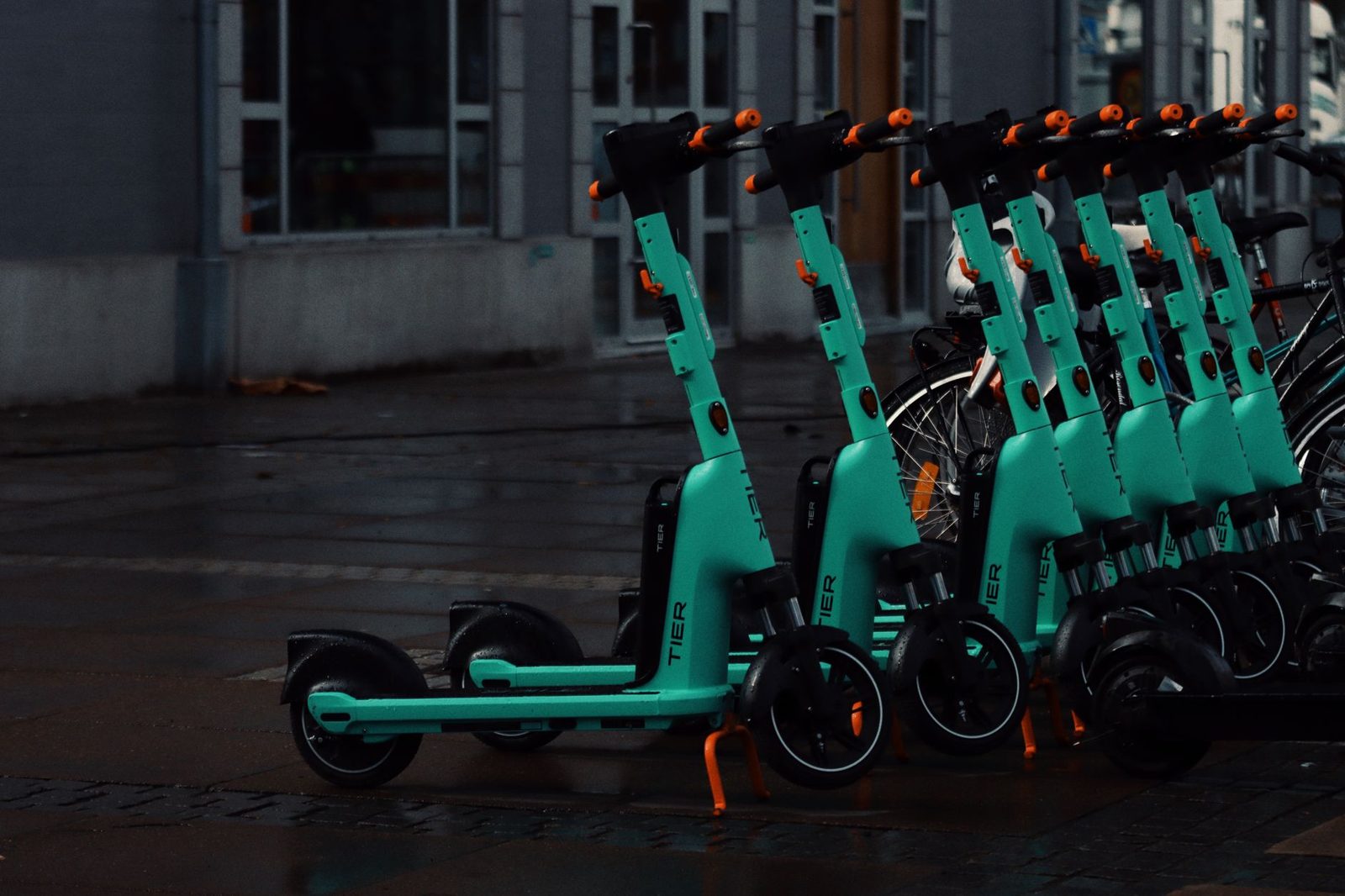
Quick answer: e-scooter hire apps let you find a shared scooter on a map, unlock it by scanning a QR code, ride, then park it in an allowed spot and end the trip in the app, usually with a photo. You normally pay per trip (an unlock fee plus a per-minute rate, or in some places a distance-based fare) or buy a pass, subscription or bundle of minutes. Age limits, licence checks, helmet rules and insurance depend on the country and city, so always read the rules shown in the app for where you are.
This guide explains how rental e-scooter apps such as Lime, Voi, Dott, Bird, Bolt, Beam, Neuron and Veo generally work. Operators and prices change often, so treat everything here as a general picture as of September 2026 and check the app for your city before you ride.
Step by step: how a typical hire works
- Download the operator’s app and create an account. Bird, for example, says you create an account in the app and, depending on your location, may be asked to verify your ID before your first ride. Dott describes the same basic process: download the app, sign up, unlock a ride.
- Add a payment method. Voi notes that it may place a small temporary hold on your card to check the payment method, which is released automatically within a few days.
- Complete any checks or training. In the UK trials, operators must collect your name and driving licence number and a photo of the front of your licence, then verify it. In New York City’s shared programme, new riders go through “Beginner Mode” for their first three trips, which are slower and cannot happen overnight.
- Find a scooter on the in-app map and check the battery. The map also shows no-ride zones, slow zones and parking areas.
- Scan the QR code on the handlebars to unlock it. Bird describes this as the step that starts your ride.
- Ride following local rules. Stay off pavements unless local law allows it, use cycle lanes where they exist, and never carry a passenger.
- Park in an allowed place and end the ride in the app. Many schemes ask for a photo to prove the scooter is parked properly. Ottawa’s official guidance, for instance, tells riders to park correctly and submit a photo through the app.
How pricing works
There is no single price for e-scooter hire. Voi states plainly that prices vary by location, time and vehicle type, and Dott tells riders to see the price that applies in their area in the Dott app. City authorities often leave pricing to the operator: Calgary, for example, says the cost of renting is set by each permitted operator. These are the main models you will see.
Pay as you go (unlock fee plus per minute)
The classic model is a small fee to unlock the scooter, then a charge for every minute you ride. Voi describes its pay-as-you-go option exactly like this. Some cities have no unlock fee at all: when we checked in September 2026, Voi’s London city page listed no unlock fee and a per-minute rate. Because you pay for every minute on the clock, a slow or roundabout trip costs more than a quick, direct one.
Distance-based fares
Not every operator charges by the minute. When Bolt took over Liverpool’s scheme in 2026, local news reported that Bolt uses distance-based pricing, unlike the previous operator, which charged per minute.
Passes, minute bundles and subscriptions
Regular riders can usually save with a plan. Voi offers subscriptions with unlimited unlocks (with or without included minutes), prepaid minute bundles and pay-as-you-go. Dott advertises passes that save money per day, week or month. Lime runs a monthly LimePrime subscription; in Seattle, Seattle Bike Blog reported in December 2025 that subscribers pay a flat fare for rides up to 20 minutes with no unlock fee, then a per-minute rate for longer rides. Plans and prices differ by city, so compare the options in the app before buying.
Discounts and low-income options
Many operators run reduced-price schemes. Lime’s Vancouver page lists Lime Access, cash payment and Lime Assist under its equity programmes. Bird says it offers cash payment at participating retail locations and SMS unlock for riders without smartphones or data plans in some cities. Chicago requires its scooter licence holders to provide low-cost options for residents with financial barriers and low-tech options for people without smartphones.
Extra charges to watch for
- Parking fines or fees if you leave a scooter outside an allowed zone or blocking a path (Bird warns that blocking access is subject to fees).
- Payment holds when you first add a card.
Parking rules
Parking is where most riders get caught out. There are two broad systems:
- Designated bays or stations only. Many UK schemes use mandatory parking bays. Voi’s London page shows parking only in designated spots, with a photo required. In Vancouver, Lime trips must begin and end at a designated parking station.
- Free-floating with rules. Some cities let you park in the “furniture zone” of a pavement, near bike racks, trees or bins. New York City runs both free-floating zones and mandatory corral zones. Chicago goes further: riders must lock the scooter to a fixed object such as a bike rack or street sign to end a trip.
Whatever the system, keep pavements, ramps, doorways and bus stops clear. The in-app map is the final word on where you can and cannot park.
Age and ID checks
The minimum age depends on local law and the operator. Some official examples:
- UK trials: you need a full or provisional UK driving licence with category Q entitlement. London and Buckinghamshire require riders to be 18 or over.
- New York City: shared e-scooter riders must be 18 or older.
- Chicago: at least 18, or at least 16 with parent or guardian consent.
- Calgary: 18 and older for shared e-scooters.
- Brisbane: at least 16 for shared devices.
- Wexford, Ireland: the Bolt pilot required riders to be 18 or over.
Expect the app to ask for ID or a licence where the law requires it, and do not lend your account to anyone else.
Helmets
Helmet law varies widely. In the UK trials, helmets are recommended but not a legal requirement. In New York City, riders aged 16 or 17 must wear one and everyone is encouraged to. Lime’s Vancouver page notes that helmets are required by British Columbia provincial law, and Brisbane City Council tells riders to always wear a helmet. Whatever the law, a properly fitted helmet is a sensible choice.
Insurance cover
Insurance is one of the least understood parts of scooter hire:
- In the UK trials, the rental operator provides third-party motor insurance, and government guidance says operators may also consider personal liability cover.
- Voi publishes insurance product information that differs by country, including third-party liability, motor third-party liability and, in some countries, personal accident cover.
- Dott says it offers complimentary insurance in eligible countries.
Third-party cover usually protects other people if you injure them or damage their property. It may not cover your own injuries. Read the insurance section in the app or on the operator’s website for your country before you rely on it.
Safety features you may notice
- Geofencing: the scooter slows down or stops in no-ride and low-speed zones.
- Speed caps: the UK trials allow up to 15.5 mph, though London’s trial scooters are capped lower. Chicago caps shared scooters at 15 mph and limits a rider’s first trip to 10 mph.
- Sobriety or reaction tests: Bolt’s Wexford scheme used an in-app reaction test at night, and Bolt’s Liverpool service has an in-app cognitive reaction test to prevent drunk riding.
- Beginner modes: slower settings for your first few rides.
Practical tips before your first ride
- Check the rules and price in the app for the exact city you are in. They can change from one council area to the next.
- Look at the no-ride and no-parking zones on the map before you set off.
- Check the battery level so you do not run out mid-trip.
- Test the brakes and throttle gently before riding into traffic. Bird advises a quick once-over because brake placement and throttle feel vary by model.
- Never ride after drinking, and never ride two-up.
- Take a clear parking photo and wait until the app confirms the trip has ended.
- If you ride often, compare passes and minute bundles against pay as you go.
- Only ride a rental scooter where it is legal. In several places, including the UK, private e-scooters are treated differently from trial rental scooters.
Country guides
For operators, cities and local rules, see our separate guides to e-scooter hire in the UK, Ireland, the United States, Canada and Australia.
Sources
- Voi: Pricing and passes (voi.com)
- Voi: London city page (voi.com)
- Voi: Insurance (voi.com)
- Dott: Ride with us (ridedott.com)
- Bird: How to ride (bird.co)
- Bird: City partners (equity options) (bird.co)
- Lime: Vancouver, BC (li.me)
- Seattle Bike Blog: LimePrime pricing overhaul (22 December 2025) (seattlebikeblog.com)
- MerseyNewsLive: Bolt e-scooters launch in Liverpool (4 February 2026) (merseynewslive.co.uk)
- GOV.UK: E-scooter trials, guidance for users
- GOV.UK: E-scooter trials, guidance for local areas and rental operators
- NYC DOT Shared E-Scooter Program: FAQ (nycdotscootershare.info)
- City of Chicago: Scooter sharing in Chicago (chicago.gov)
- City of Ottawa: E-scooter rules and safety requirements (ottawa.ca)
- City of Calgary: Shared micromobility programme (calgary.ca)
- Brisbane City Council: E-mobility (brisbane.qld.gov.au)
- RTE: Country's first e-scooter rental scheme starts in Wexford (15 August 2024) (rte.ie)