
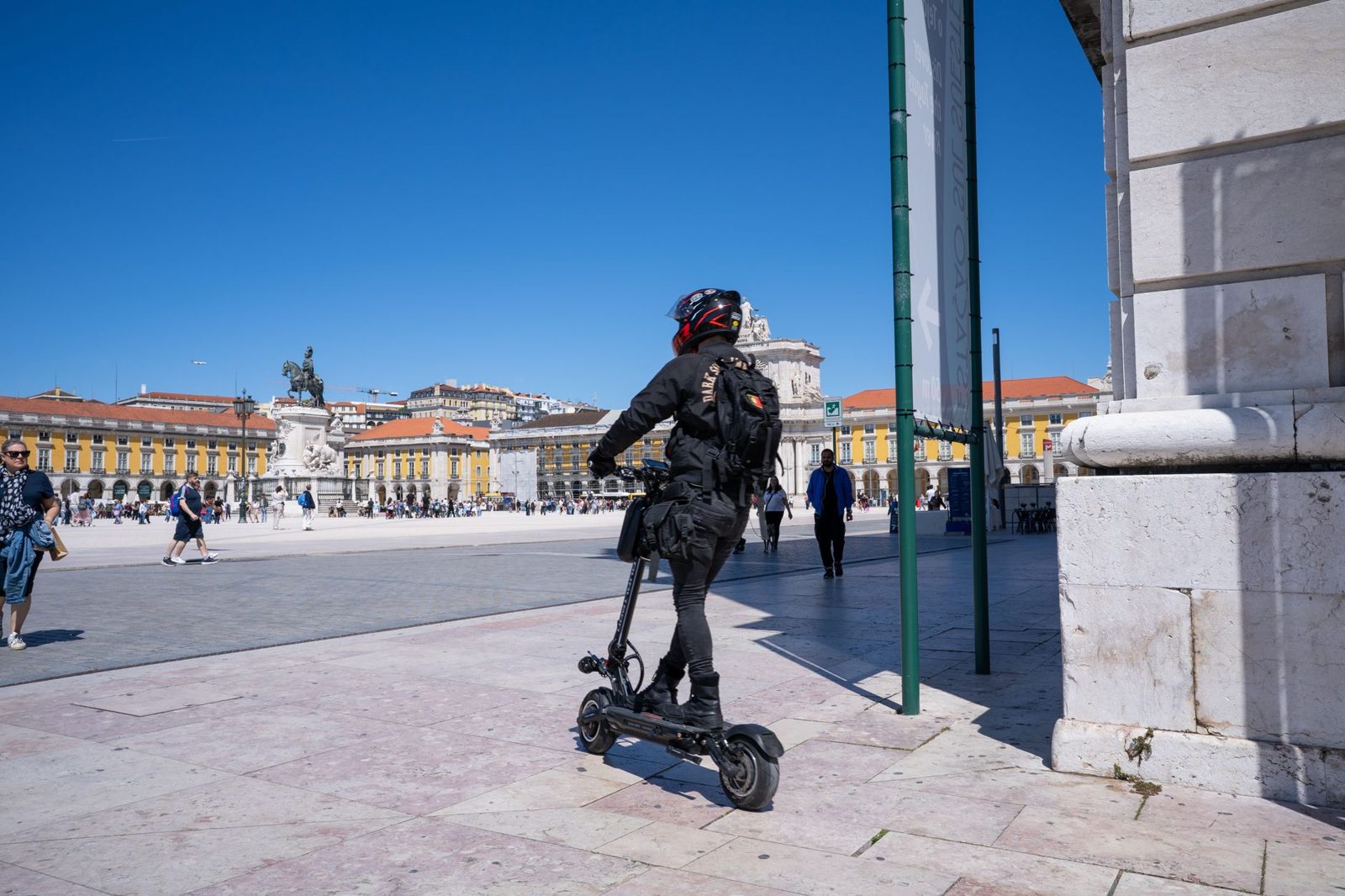
Quick answer: E-scooters have been legal on Irish public roads since 2024, but only if the scooter and the rider meet strict rules. The scooter must have a maximum design speed of 20 km/h, a continuous power output of 400 watts or less, weigh no more than 25 kg, and have lights, reflectors, brakes and a bell. Riders must stay off footpaths, obey a 20 km/h limit and, since 4 September 2026, wear a helmet and high-visibility clothing. From 2 October 2026 the minimum age rises from 16 to 18. Checked September 2026.
Ireland moved from a total ban to a regulated system in 2024, and the rules have been tightened twice in autumn 2026. This guide explains the current law in plain English, what is changing, and where to check for updates.
The legal framework
The Road Traffic and Roads Act 2023 created a new category of vehicle called the Powered Personal Transporter (PPT). E-scooters fall into this category. According to the Department of Transport, e-scooters “can be legally used on public roads only if they meet the technical and usage requirements for the category.”
The detailed rules are set out in the Road Traffic (Electric Scooters) Regulations 2024 (S.I. 199 of 2024), plus several related statutory instruments that deal with traffic rules, signs, seizure and fixed charges. In 2026 two amendments were added: S.I. 455 of 2026 (helmets and high-visibility clothing) and S.I. 489 of 2026 (minimum age of 18).
Technical rules: what makes an e-scooter legal
An e-scooter used on public roads must:
- have a maximum continuous rated power output of 400 watts or less
- have a maximum net weight of 25 kg, including batteries
- have a maximum design speed of 20 km/h or less
- have wheels with a minimum diameter of 200 mm
- be fitted with front and rear lights and reflectors, brakes and a bell
- carry a manufacturer’s plate certifying the power output, weight and design speed
- not have a seat
The Department of Transport is clear that an e-scooter that does not meet these requirements “may not legally be used on public roads.” Many powerful scooters sold online exceed these limits, so check the manufacturer’s plate before you buy.
Rider rules
The Department of Transport says an e-scooter “should be used in the same way as a bicycle on public roads.” Riders must:
- meet the minimum age (see below)
- wear a helmet and high-visibility clothing
- not carry passengers (for example, carrying children to school)
- not carry goods (for example, food or parcel delivery)
- obey a speed limit of 20 km/h
- drive on the left, including in bicycle lanes and bus lanes
- not use the footpath
- obey all rules of the road, especially at traffic lights and pedestrian, pelican and zebra crossings
- obey signals from a Garda or school warden
- obey all traffic lights, including bicycle traffic lights, and traffic signs as they apply to cyclists
- not use a mobile phone
What changed in 2026
| Change | Date | Legislation |
|---|---|---|
| Helmets and high-visibility clothing become mandatory | 4 September 2026 | S.I. 455 of 2026 |
| Minimum age rises from 16 to 18 | 2 October 2026 | S.I. 489 of 2026 |
| Fees for detention and storage of seized e-scooters doubled to €80 (detention and first day) and €30 per extra day | 2 October 2026 | Announced by the Department of Transport |
| Fixed charge for e-scooter offences to rise to €100, plus a new €100 offence for not wearing a helmet or high-vis | Not yet in force; “in the coming weeks” | Regulations to follow |
Minimum age
The 2024 regulations set a minimum age of 16. On 22 September 2026, the Minister for Transport and the Minister of State for Road Safety signed regulations raising the age to 18, “from 2nd October 2026.” The government said the change followed “a concerning number of serious injuries and fatalities involving young e-scooter users.” If you are 16 or 17, you can no longer legally ride an e-scooter on a public road from that date.
Helmets and high-visibility clothing
Helmets and high-visibility clothing have been mandatory since Friday 4 September 2026. The Department of Transport’s page now lists wearing both as a legal requirement for all riders.
Where you can and cannot ride
- Allowed: public roads, bicycle lanes and bus lanes, keeping to the left, at no more than 20 km/h.
- Not allowed: footpaths and pedestrianised areas. The Road Traffic (Traffic and Parking) (Amendment) Regulations 2024 (S.I. 222 of 2024) set out the traffic rules, including forbidding use on footpaths and pedestrianised areas.
- Signs: the Road Traffic (Signs) Regulations 2024 (S.I. 200 of 2024) mean signs for bicycles also apply to e-scooters.
Other types of PPT, such as e-skateboards and e-unicycles, and e-scooters that do not meet the regulations, remain illegal to use in public places under S.I. 224 of 2024.
Penalties and seizure
- Fixed charge: S.I. 227 of 2024 provides for a fixed charge of €50 for e-scooter offences. The government has announced this will rise to €100, with a new €100 fixed charge for not wearing a helmet or high-vis. As of late September 2026 the Department said these regulations would follow “in the coming weeks”, so check gov.ie for the current figure.
- Seizure: S.I. 223 of 2024 gives An Garda Síochána the power to seize and detain non-compliant e-scooters and other PPTs.
- Getting a seized scooter back: from 2 October 2026 the fees rise to €80 for detention and the first day of storage and €30 for each additional day.
Licence, insurance and registration
At the moment you do not need to register an e-scooter, hold a driving licence or buy insurance to ride a compliant one. However, the government has said that “proposals regarding registration, insurance and driving licence requirements for e-scooters remain under consideration”, and that “further work is also being progressed on the registration of e-scooters.” Expect more changes, and check before you ride.
Quick checklist for Irish riders
- Does your scooter have a manufacturer’s plate showing 400 W or less, 25 kg or less and 20 km/h or less?
- Does it have front and rear lights, reflectors, brakes and a bell, and no seat?
- Are you 18 or older (from 2 October 2026)?
- Are you wearing a helmet and high-visibility clothing?
- Are you on the road, a cycle lane or a bus lane, not a footpath?
- Are you alone, with no passengers or delivery goods, and not using your phone?
Common questions
Can I use an e-scooter for food or parcel deliveries?
No. The Department of Transport lists “not carry goods (for example, food or parcel delivery)” as one of the usage requirements.
Can I bring my child on the scooter?
No. Carrying passengers is not allowed, and the Department gives “carrying children to school” as an example of what is banned.
What about e-skateboards, hoverboards and e-unicycles?
These are other types of Powered Personal Transporter. Under S.I. 224 of 2024 they remain illegal to use in public places.
My scooter can go faster than 20 km/h. Can I just ride it slowly?
The rules are about the scooter’s maximum design speed, not only how fast you ride. A scooter must have a design speed of 20 km/h or less to be legal on public roads, so a faster model does not meet the technical requirements.
Where to check the law
This guide was checked in September 2026. Rules are changing quickly in Ireland. The official places to check are the Department of Transport’s e-scooter page on gov.ie and the Road Safety Authority (RSA) e-scooter FAQs. The full legal text is on the Irish Statute Book.
This article is general information, not legal advice. If you need advice about your own situation, speak to a qualified solicitor or contact the Department of Transport or An Garda Síochána.
Sources
- gov.ie, Department of Transport: E-Scooters (updated 24 September 2026)
- gov.ie: Ministers introduce regulations raising minimum age for e-scooter use to 18 (22 September 2026)
- gov.ie: Ministers introduce first in new suite of road safety regulations addressing e-scooter use (2 September 2026)