
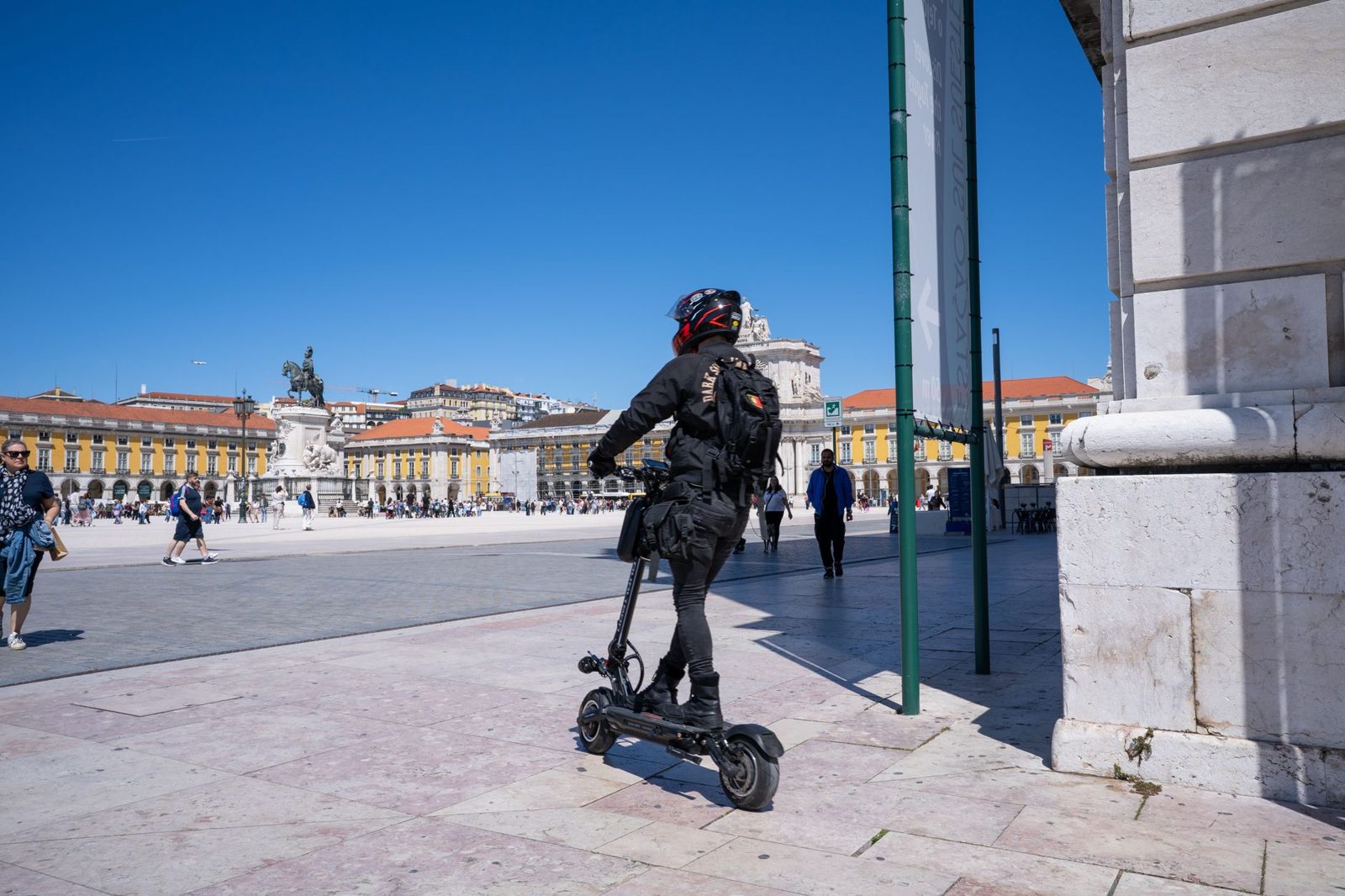
Quick answer: Wear a properly fitted helmet every time you ride. It is a legal requirement for all e-scooter riders in Ireland (since 4 September 2026), Queensland and Victoria, and for under-18s in Ontario’s pilot and in California. In the UK it is recommended rather than required for trial rental scooters. Choose a helmet certified to a recognised standard and check the label.
Where helmets are legally required
| Place | Helmet rule for e-scooter riders | Source |
|---|---|---|
| UK (rental trials) | Helmets are recommended but are not a legal requirement. Private e-scooters cannot legally be used on public land. | GOV.UK |
| Ireland | Since 4 September 2026 you must wear a helmet and high-visibility clothing while using an e-scooter. | Citizens Information |
| California, US | Riders under 18 must wear a properly fitted and fastened bicycle helmet. | Vehicle Code 21235 |
| Ontario, Canada | Pilot riders must wear a bicycle helmet if they are under 18. Riders must be at least 16. | Government of Ontario |
| Queensland, Australia | You must wear an approved bicycle helmet or approved motorbike helmet, securely fitted and fastened. | Queensland Government |
| Victoria, Australia | Helmets are required for e-scooter riders. | Victoria Police |
US rules are set state by state and sometimes city by city, and Canadian rules vary by province and municipality, so the examples above are not the whole picture. Check your local rules before you ride.
UK
For rental e-scooters in official trial areas, GOV.UK says you should wear a cycle helmet that conforms to current regulations, is the correct size and is securely fastened, but that helmets are not a legal requirement (GOV.UK). The Highway Code gives the same advice to cyclists and notes that evidence suggests a correctly fitted helmet will reduce the risk of head injury in certain circumstances (Highway Code rule 59).
Ireland
Citizens Information states that since 4 September 2026 you must wear a helmet and high-visibility clothing while using an e-scooter. It also notes announced changes that are not yet in place, including raising the minimum age from 16 to 18 from 2 October 2026 (Citizens Information).
Australia
Queensland is unusually specific. An approved bicycle helmet must comply with AS 2063, AS/NZS 2063, EN 1078, CPSC 16, ASTM F1447 or Snell B-95, and an approved motorbike helmet with AS 1698, AS/NZS 1698 or UN ECE 22.05 or 22.06. The Queensland Government says to look for a sticker on the helmet certifying compliance. Limited exemptions exist for certain medical reasons and religious headdress (Queensland Government). Victoria Police lists a helmet as a requirement for e-scooter riders (Victoria Police).
United States and Canada
In California, Vehicle Code 21235 requires motorised scooter riders under 18 to wear a bicycle helmet that meets the standards in section 21212 (California Vehicle Code). The US CPSC goes further in its safety advice and recommends always wearing a bicycle helmet on micromobility products (CPSC). In Ontario, the provincial pilot requires a bicycle helmet for riders under 18, while municipalities decide where e-scooters can be used (Government of Ontario).
Helmet safety standards by country
A helmet is only as good as the testing behind it. These are the standards and labels to look for:
- US: bicycle helmets must meet the CPSC safety standard in 16 CFR Part 1203. Under the labelling rules, a helmet should carry a label stating that it complies with the U.S. CPSC Safety Standard for Bicycle Helmets, for persons aged 5 and older or aged 1 and older (eCFR 16 CFR 1203.34).
- Australia: bicycle helmets supplied in Australia must comply with one of six standards: AS/NZS 2063:2020, AS/NZS 2063:2008, EN 1078:2012+A1:2012, US CPSC 16 CFR Part 1203, ASTM F1447-18 or Snell B-95 (ACCC).
- Canada: helmet rules are provincial. British Columbia’s bicycle helmet regulation, for example, accepts CAN/CSA D113.2-M89, several Snell standards, ASTM F 1447 and ANSI Z90.4, and requires the helmet to be undamaged (BC Laws).
- UK and Ireland: GOV.UK and the Highway Code ask for a helmet that conforms to current regulations. EN 1078, the European standard for helmets for pedal cyclists and skateboard and roller skate users, is one of the standards also recognised in Australia (ACCC).
Many e-scooter brands sell their own helmets, such as the Segway Half-Face Helmet and the NIU KQi3 helmet with LED light. Whatever brand you choose, check the certification label rather than relying on the product description.
How to choose and fit a helmet
- Size: GOV.UK stresses the correct size and a securely fastened strap (GOV.UK).
- Condition: BC’s regulation requires a helmet to be undamaged from use or misuse, have a smooth outer surface and a chin strap (BC Laws). Replace a helmet that has taken a hard knock.
- Visibility: NIU’s KQi3 helmet, for example, includes a rechargeable LED light and reflective strap (NIU).
- Speed: if you ride a faster scooter on private land, consider a helmet designed for higher speeds. Queensland’s rules show that motorbike helmet standards are also accepted for personal mobility devices (Queensland Government).
Other protective gear
A helmet is the minimum. Segway’s Max G30P manual tells riders to wear an approved helmet and other protective gear to minimise possible injury (Segway manual). Citizens Information advises riders to be seen, wear reflective or high-visibility clothing and personal protective gear, and not to use headphones (Citizens Information). The Highway Code notes that light-coloured or fluorescent clothing helps others see you in daylight and poor light, and that reflective clothing or accessories increase visibility in the dark (Highway Code).
Sensible extras include:
- High-visibility or reflective clothing, which is compulsory in Ireland.
- Gloves, which protect your hands if you fall.
- Knee and elbow pads, especially for new riders.
- Sturdy closed shoes with good grip on the deck.
Riding habits that protect you
The CPSC recommends checking your scooter before every ride, including handlebars, brakes, throttle, bell, lights, tyres, cables and frame, keeping both hands on the handlebars, slowing down over bumps, never riding while impaired and carrying only one rider (CPSC). The CPSC also reports that emergency room injuries from micromobility products rose 127% between 2017 and 2021 to 77,200, which shows why protective gear matters (CPSC).
Sources
- E-scooter trials: guidance for users (GOV.UK)
- The Highway Code: rules for cyclists (59 to 82) (GOV.UK)
- E-scooters (Citizens Information, Ireland) (citizensinformation.ie)
- California Vehicle Code section 21235 (california.public.law)
- Electric kick-style scooters (e-scooters) (Government of Ontario) (ontario.ca)
- Rules for personal mobility devices (Queensland Government) (qld.gov.au)
- Electric powered scooters (e-scooters) (Victoria Police) (police.vic.gov.au)
- E-scooter, e-bike and hoverboard injuries and deaths are on the rise (US CPSC) (cpsc.gov)
- 16 CFR 1203.34 Product certification and labeling (eCFR) (ecfr.gov)
- Bicycle helmets mandatory standard (ACCC Product Safety Australia) (productsafety.gov.au)
- Bicycle Safety Helmet Standards Regulation, B.C. Reg. 234/96 (BC Laws) (bclaws.gov.bc.ca)
- Segway Half-Face Helmet (Segway US official store) (store.segway.com)
- NIU KQi3 Electric Scooter Helmet with LED Light (NIU official US shop) (shop.niu.com)
- Ninebot KickScooter Max G30P user manual (Segway) (store.segway.com)